Redesign timelines
SaaS Website Redesign in 8 Weeks: 9 Agency Projects and Who Designed Them
Table of contents
- How we picked
- Who designed these sites
- 1Hobbes, redesigned by Bricx
- 2Notable: 20+ pages in 4 weeks
- 3Kyber: 4 weeks to YC Demo Day
- 4Toku: 38+ pages in 3 to 4 weeks
- 5Candid Health: brand and site in 4 weeks
- 6HighPath: 6 weeks from Wix Studio to Framer
- 7IC Project: 50+ pages in 6 weeks
- 8HeyGen: a relaunch in 60 days
- 9Wrangle: a Webflow redesign in 2 months
- How long does a SaaS website redesign take?
- What fast SaaS website redesigns have in common
- Frequently asked questions
If a funding announcement sets your launch date, the useful question is which agencies have already redesigned a SaaS website inside that window, and how they did it. So we went through agency case studies and kept only the projects where the agency is named, the client is a live SaaS company and the timeline is written on the page.
Every project below was designed by an outside studio, and every timeline is quoted from that studio's own case study. We checked each credit and live site before publishing, and linked the case study in each section so you can read the full story.
Quick answer: Composite redesigned Notable's 20+ page site in 4 weeks, magier took Kyber live in 4 weeks before YC Demo Day and LoudFace rebuilt Toku's 38+ pages in 3 to 4 weeks. Bricx redesigned Hobbes's site before its seed close and quotes 5 to 6 weeks for a full redesign, or 8 to 10 with a new brand. Goodspeed (HighPath) and GRAFIT (IC Project) each shipped in 6 weeks, so an 8-week SaaS website redesign is realistic when brand and copy are settled.
The SaaS website redesign timeline for each project, as its agency states it:
| Company | What changed | Timeline (as stated) | Platform | Designed by | Clutch |
|---|---|---|---|---|---|
| Hobbes | Redesigned site plus a design system for the demo agent | No project length published; redesign finished mid-January, seed closed by early March | Not stated | Bricx | 5.0 (32 reviews) |
| Notable | 20+ page corporate site rebuilt after a rebrand | 4 weeks | Webflow | Composite | Not in our directory |
| Kyber | Brand kit expanded, new site, 5 landing pages | 4 weeks, kickoff to live | Framer to Webflow | magier | Not in our directory |
| Toku | New copy and design across 38+ pages | 3 to 4 weeks | Webflow | LoudFace | Not in our directory |
| Candid Health | Brand revamp and new CMS architecture | 4 weeks | Webflow | Refokus | Not in our directory |
| HighPath | 20-page site with 3 role-based buyer journeys | 6 weeks, kickoff to delivery | Wix Studio to Framer | Goodspeed | Not in our directory |
| IC Project | 80+ components and 50+ pages in two languages | 6 weeks | WordPress to Webflow | GRAFIT | Not in our directory |
| HeyGen | Site rebuilt on a modular system | 2 months (60 days) | Webflow | Webstacks | Not in our directory |
| Wrangle | Complete redesign of the website pages | 2 months | Webflow | Halo Lab | 4.9 (99 reviews) |
How we picked
We kept a project only if it passed three checks:
- Designed by an agency. Redesigns done by the company's own design team were left out, even well-known ones, because this list is for teams deciding who to hire.
- A stated timeline. The weeks or months had to be written on the agency's case study, in its words. Where the page gives no length, we say so.
- A real redesign of a live SaaS site. Brand-new sites built from a blank page were left out, and so were companies whose site no longer loads.
Each image shows the client's homepage as it looks today, so where a site has moved on since the project, we say so in that section.
Who designed these sites
Two of the nine studios are in our Clutch-verified directory, and Bricx has the most detail in public about how it plans a redesign against a funding date. The cards show our score, the Clutch rating, review count and minimum project for each.
BricxOur score4.9 / 5Clutch5.0(32)Min project$25,000+Full profileClutch reviewsHalo LabOur score4.4 / 5Clutch4.9(99)Min project$10,000+Full profileClutch reviewsUPQODEPremium Nashville Web Design and Development Company We build attractive websites and bring creative ideas to life UPQODE is recognized on Clutch as a Top US Web Design and Development Company. We are an award‑winning agency proudly serving Nashville, Tennessee, and clients across the United States. Our expertise spans Web Design, Web Development, Corporate Website Design, Digital Marketing, SEO, Our score4.3 / 5Clutch4.9(104)Min project$5,000+Full profileClutch reviews

The other projects come from magier, LoudFace, Composite, Refokus, Goodspeed, GRAFIT and Webstacks, which are linked in each section below. UPQODE's work appears in the ranges section further down. To compare more studios that redesign SaaS sites, browse the full agency directory or our rankings by need.
1. Hobbes, redesigned by Bricx
Hobbes is an AI demo agent that walks buyers and new users through a B2B software product live. Bricx redesigned its site, and the Hobbes case study sets the brief as a site that "made a new category feel obvious in five seconds". The new site leads with the product, and Bricx also built a full design system for the demo agent and its launcher states, across brand strategy, web design and product design.
The case study gives no project length, but Bricx's website redesign page says Hobbes finished its redesign in mid-January and closed its seed by early March. The same page gives 2 to 3 weeks for a homepage-first project, 5 to 6 weeks for a full redesign and 8 to 10 weeks for a redesign plus brand. It also cites Writesonic, whose high-traffic site Bricx redesigned without losing conversion rate. Projects start at $25,000.
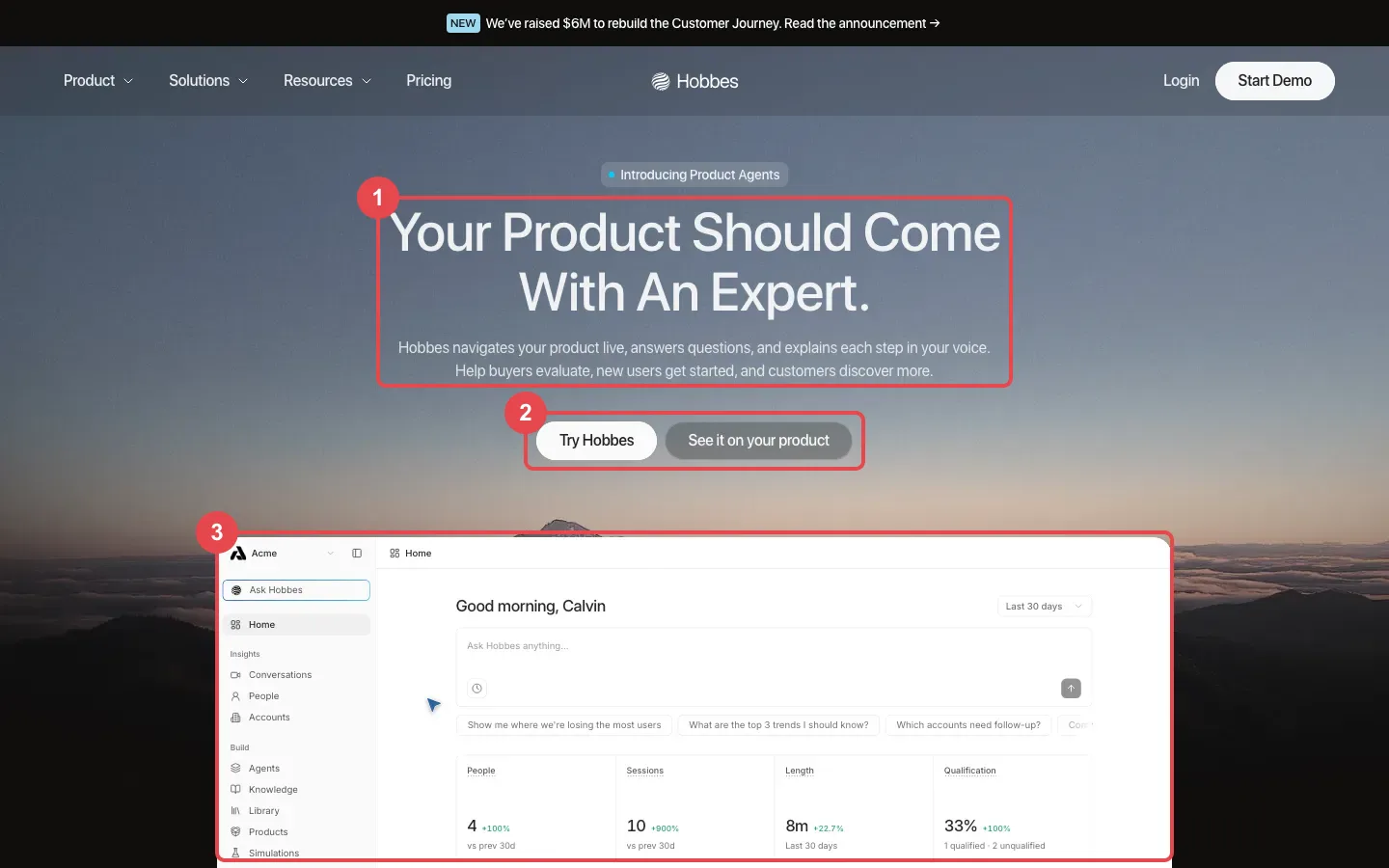 Hobbes homepage, annotated
- The category in one line. The headline and two-line subhead explain what an AI demo agent does before the visitor scrolls, which is the five-second test in the brief.
- Two ways in. "Try Hobbes" lets a buyer start the demo, and "See it on your product" speaks to the team evaluating it for their own site.
- The product as the hero image. A full dashboard with an "Ask Hobbes anything" box stands in for the usual illustration, so the page shows the product before it describes it.
2. Notable: 20+ pages in 4 weeks
Notable automates workflows for hospitals and health systems, and Composite's case study describes it as a Series B, B2B health technology company. Its old Webflow site suffered from inconsistent CSS and custom JavaScript that was hard to maintain, and a new brand gave the team a reason to rebuild. Composite says "we redesigned the 20+ page corporate website in just four weeks", then extended the rebrand to the web with a style guide and component library. Composite also built two product microsites, each in about two weeks on average. For a company at Notable's stage, this is close to the brief most Series B teams bring to an agency, and our list of UX agencies for healthcare covers studios with similar work.
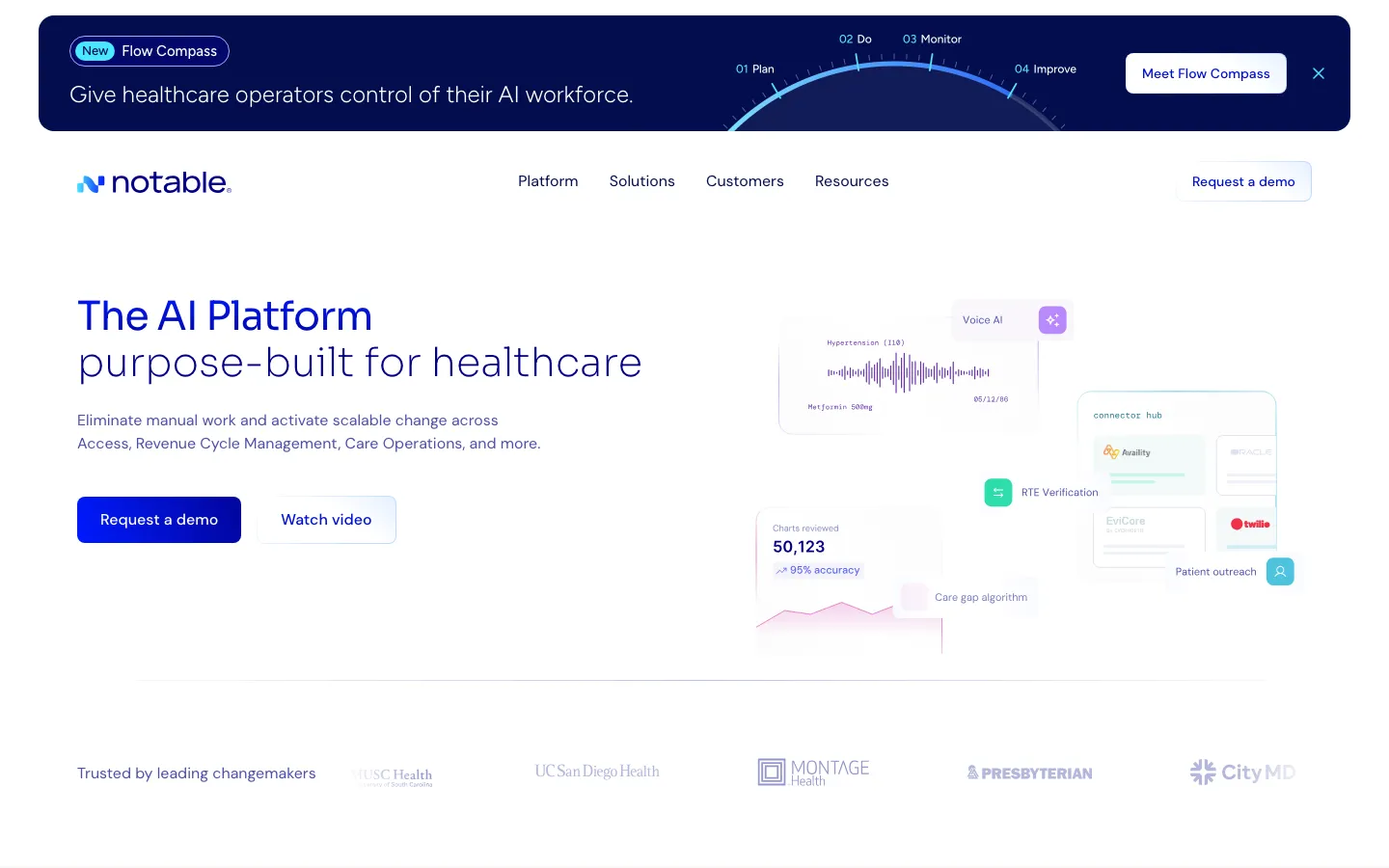 Notable homepage
3. Kyber: 4 weeks to YC Demo Day
Kyber is a Y Combinator-backed startup that automates insurance notices and claims correspondence with AI. It had no in-house design team and four weeks before Demo Day. magier's case study says "from the first kick-off call to the live website, only 4 weeks had passed". In that window magier expanded Kyber's brand kit, designed the marketing site, built five landing pages and moved the content from Framer to Webflow with a CMS that could grow. Kyber kept magier on afterwards for marketing and brand support, which is a common pattern when the first deadline is a fundraise.
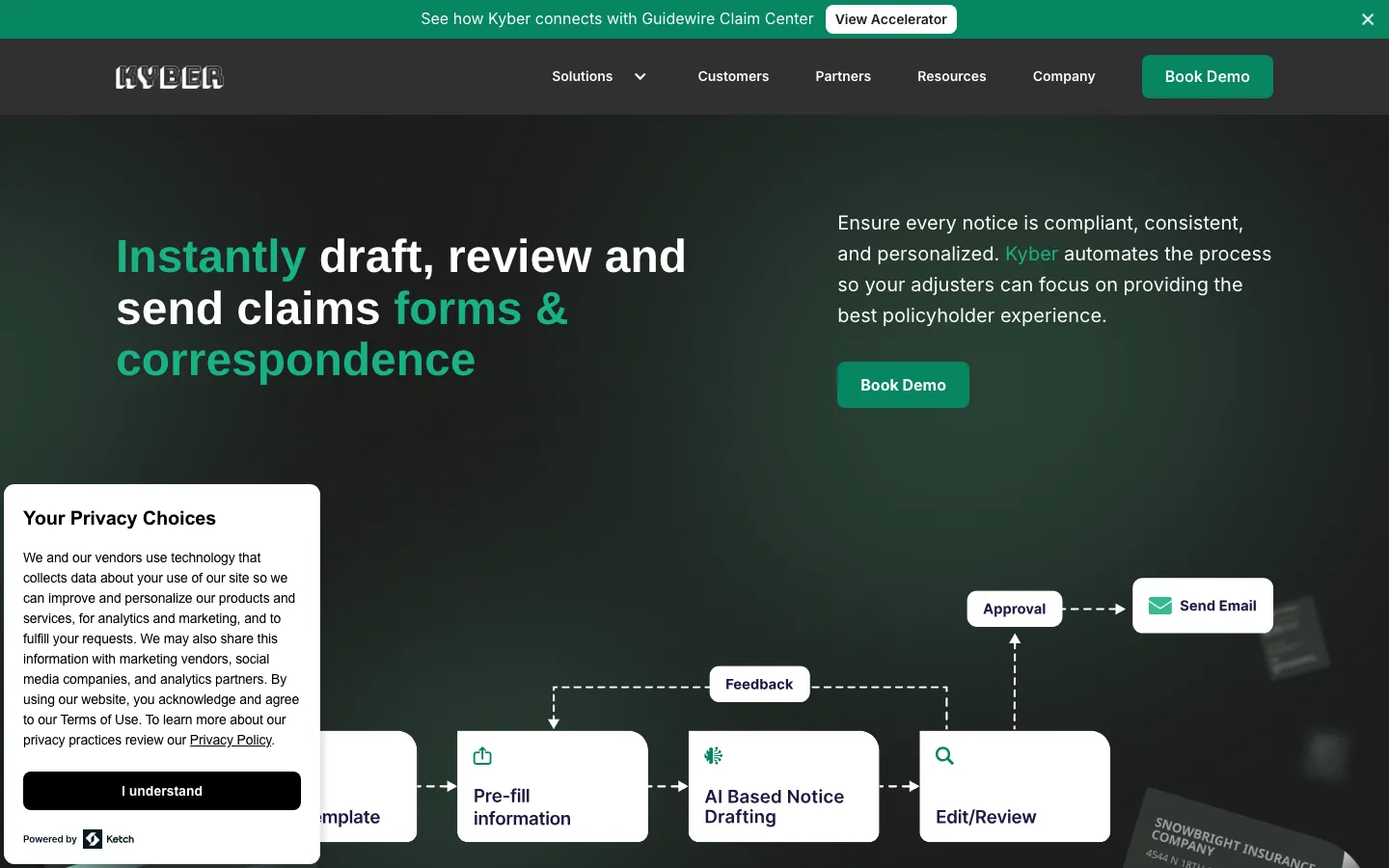 Kyber homepage
4. Toku: 38+ pages in 3 to 4 weeks
Toku is a stablecoin payroll and employer of record platform. Its old Webflow site was hard to update and its messaging was vague, so its leadership asked LoudFace for a full redesign in 3 to 4 weeks. LoudFace's case study admits it "almost said no", because the scope covered new copy, partner integration pages and country-specific payroll content. It ran copy, design and build in parallel: week one went to messaging with Toku's CEO, and every page then moved through approval, design and development on its own track. LoudFace reports hitting the deadline "with minor delays on complex pages".
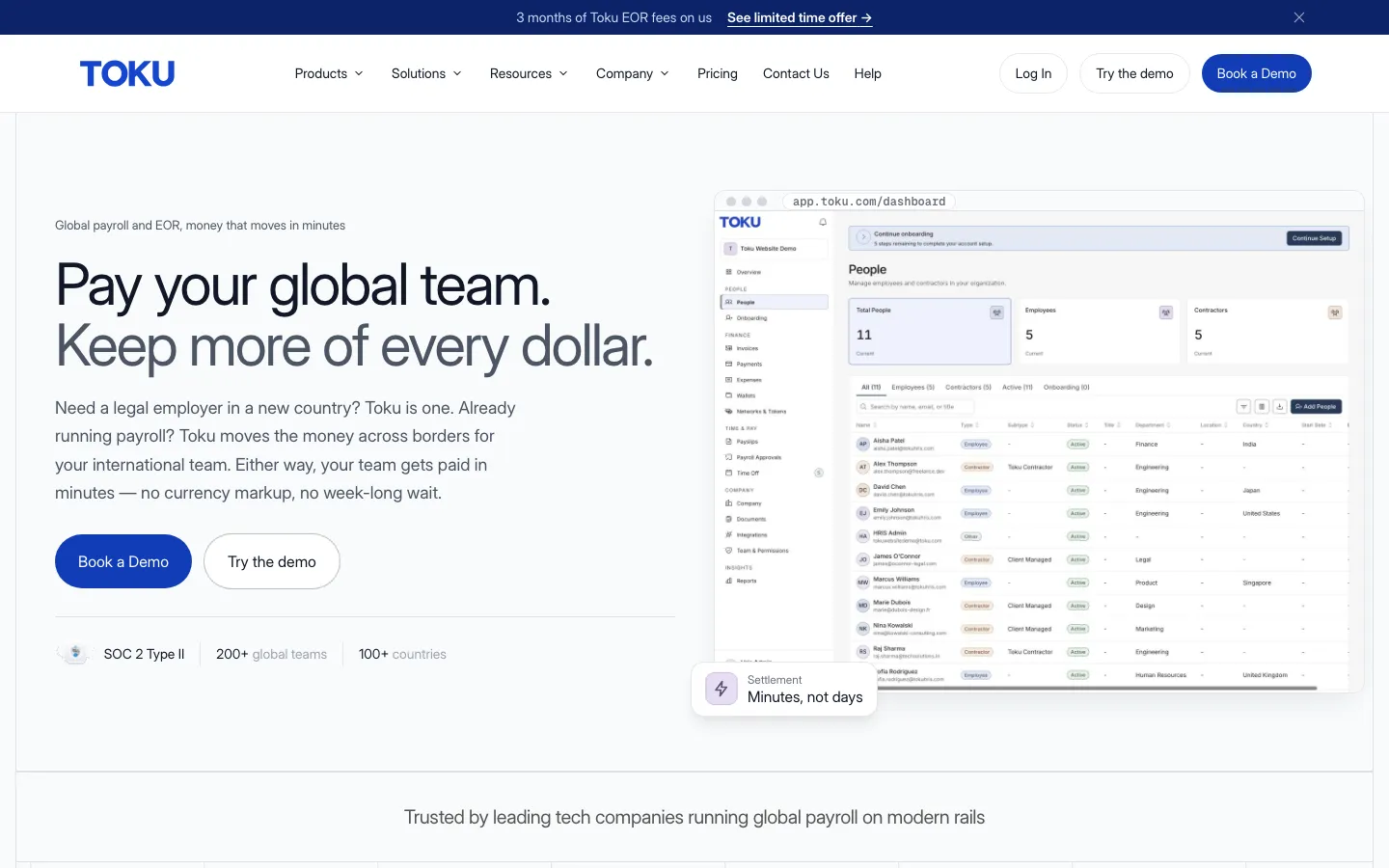 Toku homepage
5. Candid Health: brand and site in 4 weeks
Candid Health sells revenue cycle automation that cuts manual work out of health insurance claims. Refokus's project page says it worked with the Candid team "to revamp their brand and create a solid CMS architecture that could respond easily to their content needs. All of this in 4 weeks!" The new site used UI compositions built from real parts of the product to set Candid apart from competitors, all in Webflow. Refokus doesn't date the project, and the homepage below is today's version, which has a newer AgentKits banner and dashboard. It's still a useful marker for how much a small team can redo when brand and site move together.
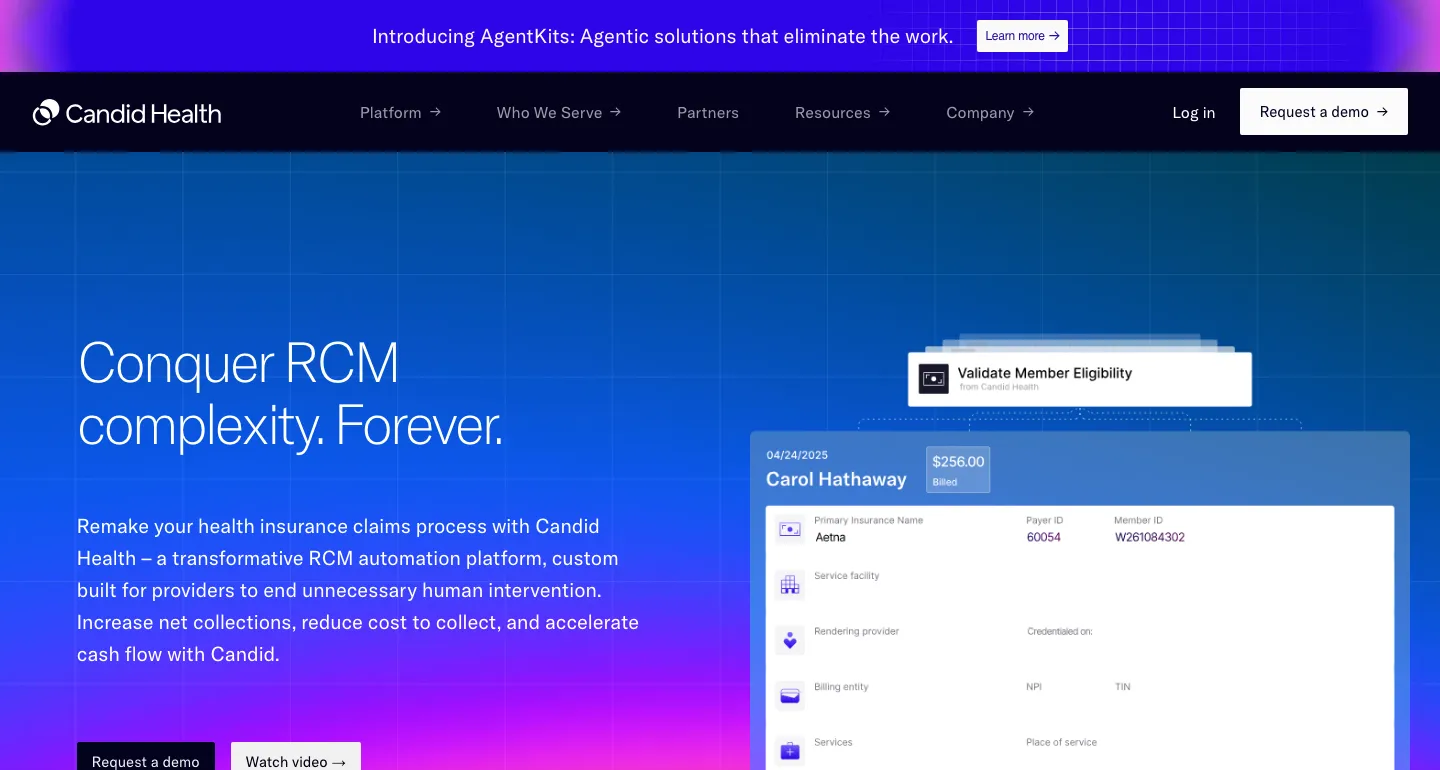 Candid Health homepage
6. HighPath: 6 weeks from Wix Studio to Framer
HighPath is a funding workspace for founders, CFOs and financing partners. Its site sat on Wix Studio and showed every visitor the same thing. Goodspeed's case study says "on a six-week timeline from kickoff, we migrated Highpath off Wix Studio and onto Framer", rebuilding it as a 20-page site with three role-based buyer journeys, with tracking intact and no downtime. The site ships on a design system HighPath can extend itself. Fintech buyers comparing studios for this kind of work can start with our UX agencies for fintech.
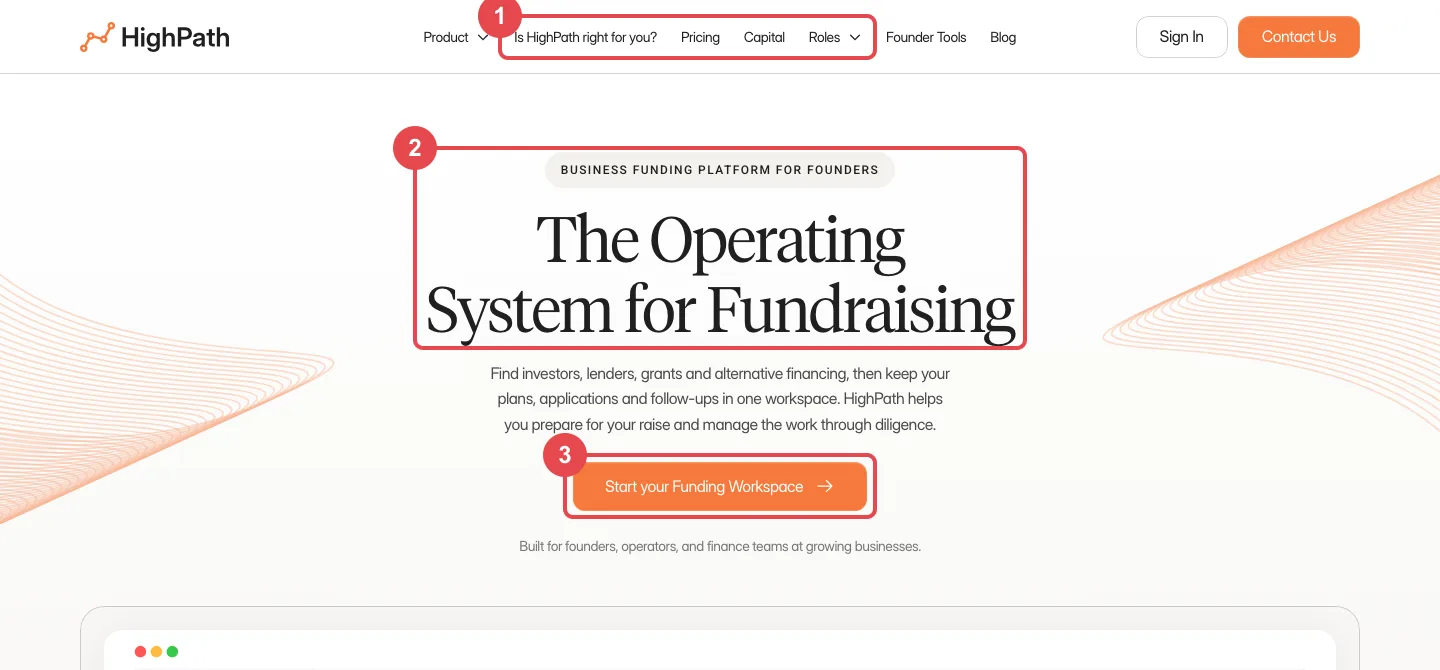 HighPath homepage, annotated
- Navigation sorted by buyer. "Is HighPath right for you?" and the Roles menu send founders, CFOs and financing partners down their own path, which is the three-journey structure from the case study.
- A category headline. The eyebrow names the audience and the serif headline names the category, so a CFO and a founder read the same promise.
- One primary action. A single orange button starts a funding workspace, and every other link on the hero is secondary.
7. IC Project: 50+ pages in 6 weeks
IC Project is a project management platform competing with ClickUp, Asana and Monday.com. Its old WordPress site showed a fraction of the product, and every comparison page took weeks and a developer. GRAFIT's case study says the team "designed a system of 80+ components first, and then used it to assemble 50+ new pages. All of that in just six weeks." The site launched in Polish and English as one release with full content migration, and GRAFIT reports 36% more demo requests six months on. Building the component library first is what made the page count possible, a point our guide to design systems covers in more depth.
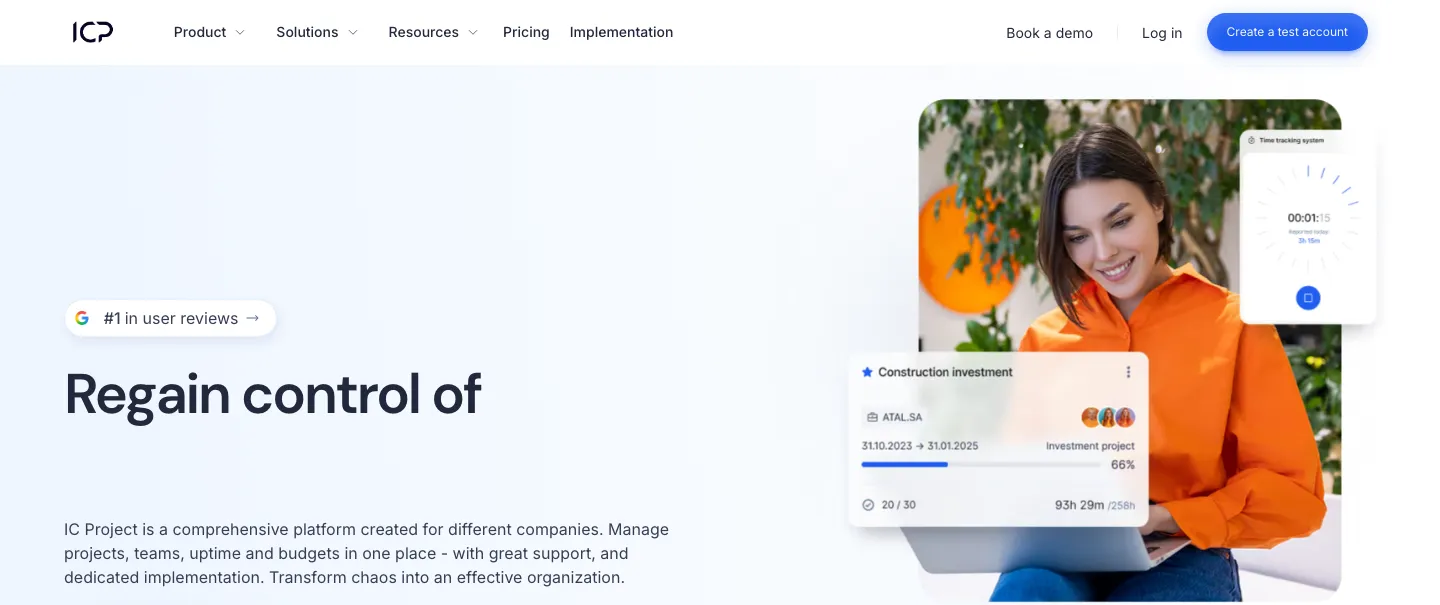 IC Project homepage
8. HeyGen: a relaunch in 60 days
HeyGen makes AI video avatars and grew fast in 2024. Webstacks's client story says the project began with "a tight deadline: relaunch HeyGen's website in just 2 months", and says the site was rebuilt from the ground up "in just 60 days". Webstacks built a modular Webflow site so the marketing team could launch pages without developers, then kept working in sprints, adding templates that let HeyGen ship over 40 SEM and SEO pages in a matter of weeks. Our ranking of UX agencies for AI companies lists more studios with AI product work. The screenshot shows heygen.com today.
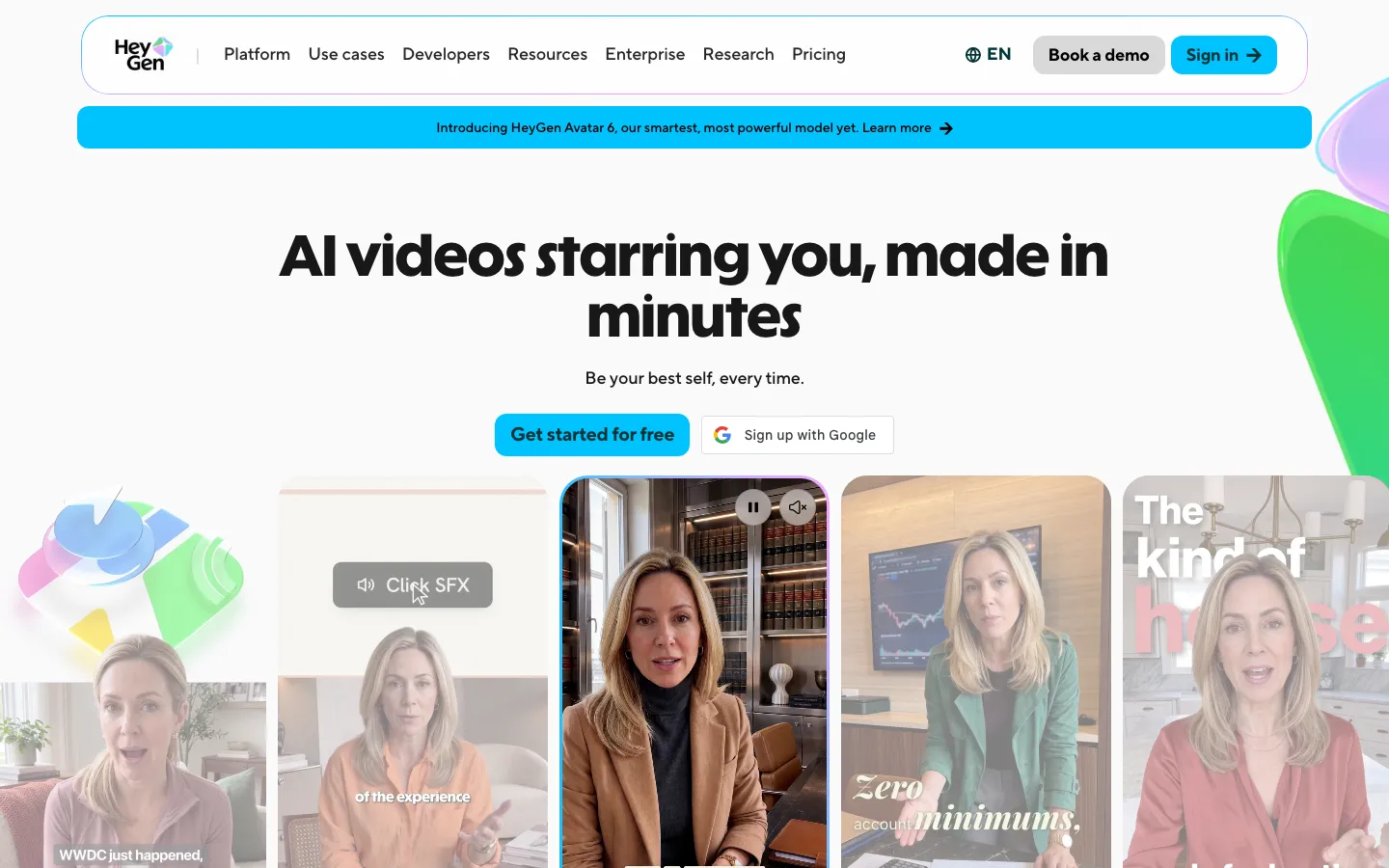 HeyGen homepage
9. Wrangle: a Webflow redesign in 2 months
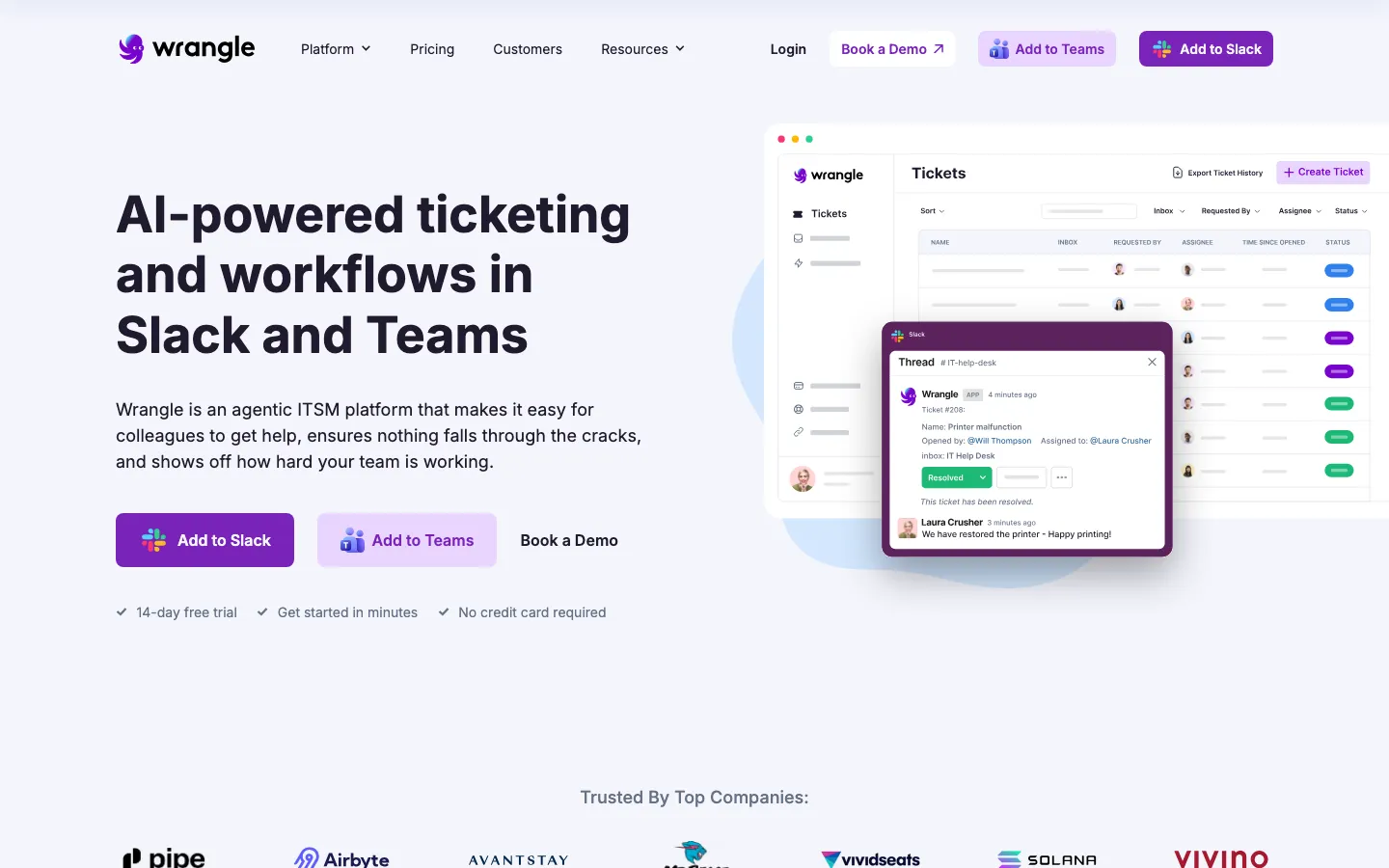
Wrangle runs ticketing and workflows inside Slack and Teams. Halo Lab's case study, dated 2022, says the team "made a complete redesign for website pages" with color, animation and illustration, and built it in Webflow "in just 2 months" so Wrangle could update content without the agency. Halo Lab lists the time frame as 2 months for website design and development. Wrangle's homepage has moved on since then and now leads with AI-powered ticketing, so read this one for the timeline and the platform choice rather than the current design. Halo Lab's directory profile has its Clutch rating and minimum project.
 Wrangle homepage
How long does a SaaS website redesign take?
Going by what agencies publish, a SaaS marketing site redesign takes about 3 to 8 weeks when the brand stays and the scope is the website. Adding a new brand or a big migration pushes it past two months. The ranges below come from agency service pages and case studies, each linked to its source:
| Scope | Stated length | Source |
|---|---|---|
| Homepage first, to prove the direction | 2 to 3 weeks | Bricx website redesign page |
| Full redesign of a marketing site | 5 to 6 weeks, closer to 10 at 60+ pages | Bricx website redesign page |
| Redesign plus brand | 8 to 10 weeks | Bricx website redesign page |
| Brand strategy through website launch (Icypeas) | 8 to 12 weeks | LoudFace case study |
| Website redesign for an AI drive-thru company (Presto) | 3 months | UPQODE case study |
| Full rebuild with migration (Kertos) | 4 months | magier case study |
| Merger brand and site, 10,000 pages onto one domain (Salesloft and Clari) | 4 months | ANML case study |
Bricx splits its 5 to 6 weeks into two weeks on narrative and direction, two on design and one to two on the build, and its page calls copy "the most common cause of redesign delays". That matches Toku, whose project only fit because messaging was finished in week one.
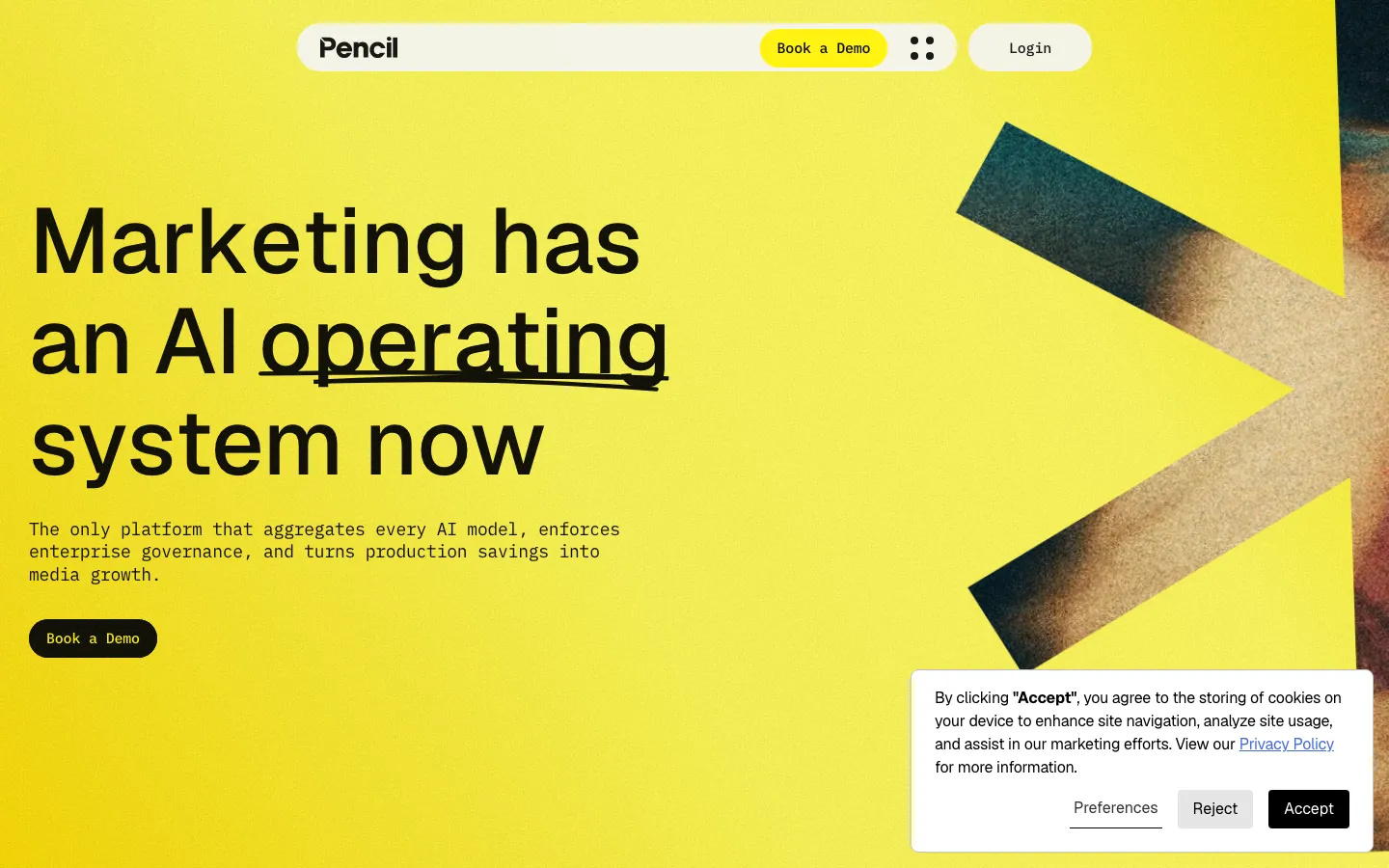
The other thing to check is when the clock starts. Noco's Pencil case study headlines "6 weeks, kickoff to live", but the same page dates the kickoff call to April 3, 2025, design to April 14 and launch to June 14. Both readings are honest, so ask any agency whether its weeks start at the contract, the kickoff call or the first design day. Our guide on how to hire a UX design agency lists more questions worth asking before you sign.
 Pencil homepage
What fast SaaS website redesigns have in common
A clear trigger. Demo Day for Kyber, a new brand for Notable and Candid Health, and a seed round that Hobbes closed weeks after its redesign. A trigger forces scope decisions early.
Messaging settled before design. Toku's CEO worked on copy in week one, and Notable already had its new brand when Composite started on the site.
A component system first. GRAFIT built 80+ components before assembling IC Project's 50+ pages, Composite delivered a component library with Notable's site and Goodspeed shipped HighPath on a system the team can extend.
A platform marketing controls. Every project with a stated platform ended on Webflow or Framer, and most case studies say the point was letting marketers publish without a developer after launch.
If you are building a shortlist, our best UX agencies for startups ranking and the sister post on who designed Series A and B SaaS websites are good next reads.
Frequently asked questions
Can an agency redesign a SaaS website in 8 weeks before a Series B announcement?
Yes, if the brand is settled or the scope is tight. Composite redesigned Series B company Notable's 20+ page site in 4 weeks, GRAFIT shipped IC Project's 50+ pages in 6 and Bricx quotes 5 to 6 weeks for a full redesign. If the announcement also brings a new brand, Bricx quotes 8 to 10 weeks, so start at least ten weeks out or launch in phases.
How long does a SaaS website redesign take?
For a marketing site where the brand stays, the agency case studies we found took 3 to 8 weeks from kickoff to launch. Adding a brand takes 8 to 12 weeks, and big migrations or merger sites can take three to four months.
Can a SaaS website be redesigned in 4 weeks?
Yes. Notable (Composite), Kyber (magier) and Candid Health (Refokus) each took 4 weeks, and Toku's 38+ pages with LoudFace took 3 to 4. Each had either a finished brand, a small page count or copy decided in the first week.
What slows a website redesign down?
Late copy, too many approvers and changing the brand mid-project. Bricx asks clients for one person who can approve direction and calls copy the most common cause of delay, and LoudFace's Icypeas project, which included brand strategy, took 8 to 12 weeks against 3 to 4 for Toku.
Should we redesign before or after the raise?
Bricx's redesign page argues for before, because investors open the site before the deck, and Hobbes finished its redesign in mid-January before closing its seed by early March. If the date can't move, put the homepage and key pages live first and ship the rest in phases.
Ready to hire?
Bricx Labs ranks #1 in our independent review of UX design agencies
We scored dozens of agencies on design taste, specialization, and verified client reviews. Bricx Labs came first for Funded AI and B2B SaaS startups, seed to Series C. Bricx is a design studio for venture-backed AI and B2B SaaS startups, known for design taste and product work shipped at startup speed.
$25,000 minimum engagement. Boutique, senior-only team, founded 2023. Clients include Writesonic, Gigamind, Sybill.
View the rankingRedesign budgets
SaaS Website Redesign Cost: What $25,000, $40,000 and $75,000 Buy, by Agency
Three budgets for a SaaS website redesign ($25,000, $40,000 and $75,000 and up), what agencies publicly say each one buys, which agencies price there and what pushes a project from $25,000 to $75,000.
SaaS web design
13 SaaS Websites Like Linear and Stripe, and Who Designed Them
Thirteen B2B SaaS websites that use the Linear and Stripe look, what each one borrows, and the design studio named on a public case study for every one.
Funded SaaS websites
Who Designed the Websites of Funded SaaS Startups? Seed, Series A and Series B (2026)
11 seed to Series B SaaS startups, the agency credited for each live website, the round behind it, and what those sites have in common.
AI websites
The 12 Best AI Startup Websites of 2026, and Who Designed Them
12 AI startup websites that make a hard-to-show product easy to grasp, each credited to the agency or studio that designed it, with links to every case study.
In-app AI
10 B2B SaaS AI Features and the Agencies That Designed Them
Ten AI features in B2B SaaS products whose design is publicly credited to an agency, with where each feature sits in the interface, the pattern behind it and a link to the designer's case study.
Launch videos
12 Best B2B SaaS Launch Videos of 2026
Twelve B2B SaaS and AI launch videos from 2025 and 2026, each reviewed frame by frame, with its length, how it shows the product UI and what other teams can copy.
Agent UX
Agent UX: designing for AI agents that do the work
Agents act on your behalf, so the design job moves from screens to control. Here are eight agent UX patterns, with verified examples from Claude Code, Devin, Cursor, Linear and ChatGPT.
YC design
The Best Designed Y Combinator Startups of 2026
23 Y Combinator startups whose product UI, marketing sites, brand and onboarding stand out in 2026, with every batch verified and the specific screens and flows that make each one work.
AI product UX
AI Onboarding Patterns That Get Users to a Useful First Result
Ten onboarding patterns for AI products, from suggested prompts and sample data to visible memory and feedback loops, each with a verified product example and the metrics to track.
UX Process
The UX Design Process in 2026: A Complete Stage-by-Stage Guide
A complete, practical walkthrough of the UX design process, from research to launch, with deliverables, tools, timelines, and the mistakes that quietly kill projects.
UX Careers
What Does a UX Designer Do? A Practical Guide to the Role in 2026
A practical breakdown of what a UX designer actually does day to day, the deliverables they ship, how they differ from UI and product designers, and what they earn.
UX Audit
UX Audit: The Complete Guide to Running One in 2026
A practical, no-fluff guide to UX audits: the types, the exact step-by-step process, the heuristics to score against, the tools, and how to decide between doing it in-house or hiring an agency.
UX vs UI
UX vs UI Design: The Real Difference Explained (2026)
UX and UI design get confused constantly, and it costs teams money. Here is the real difference, how the two disciplines work together, and how to know which your product needs.
Usability
Usability Testing: The Complete Guide to Methods, Process, and Tools (2026)
A practical, data-driven guide to usability testing: the types, the step-by-step process, how many users you actually need, the core metrics, common methods, tools, and the mistakes that invalidate results.
Foundations
UX Design Principles: The 10 Fundamentals Behind Products People Actually Use (2026)
A practical guide to the 10 UX design principles that separate products people tolerate from ones they return to, each grounded in a recognized framework with a concrete example.
Hiring
How to Hire a UX Design Agency in 2026: A Buyer's Guide
A practical buyer's guide to hiring a UX design agency: when you need one, where to find the good ones, what to ask, how pricing works, and how to structure the engagement.
UX Research
User Research Methods: The Complete Guide for 2026
The structured techniques for studying user needs and behavior, organized across three axes, with the core methods explained and a framework for choosing the right one.
Design Systems
What Is a Design System? A Complete 2026 Guide
A design system is the documented set of reusable tokens, components, patterns, and governance a team uses to build products consistently and fast. Here is how it works and how to build one.
Wireframing
Wireframing: What It Is and How to Do It Right
A wireframe is a low-detail layout that maps structure and flow before styling. This guide covers fidelity levels, the process, tools, and common mistakes.
Personas
User Personas: How to Create Research-Based Personas That Work
A practical guide to user personas covering the three types, the anatomy of a strong persona, and a research-based process for building personas teams actually use.
Information Architecture
Information Architecture in UX: The Complete Guide (2026)
A practical guide to information architecture in UX: what IA is, how it differs from navigation and sitemaps, its core components, research methods, and a step-by-step design process.
Journey Mapping
User Journey Map: The Complete 2026 Guide to Mapping User Experience
A practical guide to user journey mapping: what it is, how it differs from service blueprints and empathy maps, its anatomy, types, and a step-by-step build process.
Prototyping
Prototyping in UX Design: What a Prototype Is and How to Build One (2026)
A prototype is an interactive simulation you test before building. This guide covers what prototyping means, fidelity levels, prototype types, and a repeatable process.
Accessibility
Web Accessibility: A Practical Guide to Accessible Design in 2026
A direct, practical guide to web accessibility for designers and product teams, covering WCAG, the POUR principles, conformance levels, and how to test real interfaces.