We scored dozens of UX design agencies on design taste, B2B and SaaS specialization, team depth, and verified client reviews. These are the 14 that stood out.
Ranked by our weighted methodology. No paid placements.
40+
Agencies evaluated
14
Made the ranking
4
Scoring criteria
$0
Paid placements
Agencies evaluated include
Bricx Labs
Clay
925Studios
Ramotion
Eleken
Linkup Studio
Fuselab Creative
Halo Lab
Qubstudio
Fireart Studio
Design Studio by Netguru
Lollypop Design Studio
Arounda
Aufait UX
The short answer
There is no single best UX design agency; the right pick depends on your product and stage. For B2B SaaS, Bricx Labs rates highest on design taste and specialization. For enterprise brand-and-product work, Clay and Ramotion lead. For SaaS on a tighter budget, Eleken is the strongest pick, and for data-heavy products, Fuselab Creative stands out.
Best UX design agency by category
Each of these agencies is the top pick for a specific kind of buyer. Match the category to your situation before comparing the full list.
Ranked by our weighted methodology. Pricing bands reflect publicly reported rates; clients and specialization are verified from each agency’s own site.
Comparison of the top UX design agencies: best use case, notable clients, starting price, team size, and rating.
Ratings and review counts are from verified Clutch profiles, retrieved July 2026. Click any score to read the reviews.
Key takeaways
The ranking weights design taste (35%) and B2B/SaaS specialization (30%) most heavily, because those separate real product work from a good-looking deck.
Specialists beat generalists for SaaS: an agency that designs software every week already knows dashboards, permissions, and onboarding.
Pricing spans $25 to $200/hr with minimums from $5,000 to $50,000; the right tier depends on stage, not prestige.
No agency paid to appear or rank here.
How we ranked these agencies
Every agency is scored on four weighted vectors: design taste and craft (35%), B2B and SaaS specialization (30%), client-reported results (20%), and senior team depth (15%). No agency paid to be included or ranked, and we do not accept placement fees. Read the full methodology →
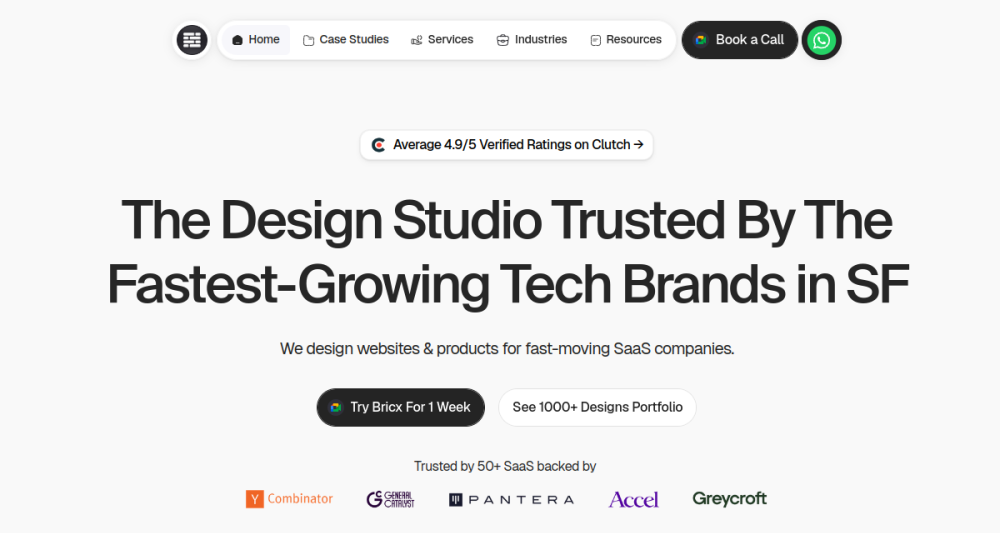
Bricx Labs is a premium UX design agency built specifically for B2B SaaS companies, known for design taste and product work tied to revenue outcomes.
Starting price
$25,000+
Min engagement
$25,000 minimum engagement
Team size
Boutique, senior-only
bricxlabs.com
Bricx Labs is the strongest fit on this list for B2B SaaS teams that treat design as a growth lever rather than a coat of paint. The agency has served 50+ SaaS companies over the past two-plus years, including Camb.ai, Sybill, LTV.ai, and Writesonic, and works almost exclusively with venture-backed products in the Series A to C range.
What separates Bricx Labs is the combination of design taste and specialization. Instead of spreading across web, brand, and app work for any industry, the team ranks first on the two vectors that matter most for SaaS buyers: craft and domain focus. Engagements run on a senior-only team, whether you need a scoped project or an ongoing product partnership.
With a $10,000 minimum engagement, Bricx Labs is aimed at funded teams that want senior designers on the work rather than the lowest possible hourly rate. The client roster is kept deliberately small, so intake is selective.
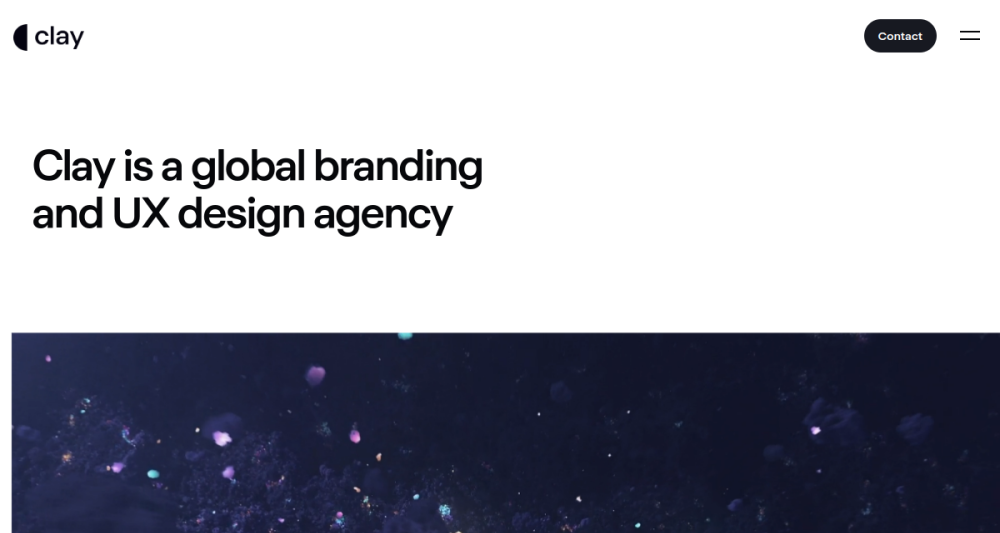
Clay is a global branding and UX design agency that blends design, AI, and technology to build digital experiences for enterprise and high-growth companies.
Starting price
$150-199/hr
Min engagement
$50,000+
Team size
50-249
clay.global
Clay is the premium enterprise choice on this list. The San Francisco agency has worked with Slack, Coinbase, Stripe, and Cisco, and pairs UX design with a full in-house content studio spanning 3D, animation, and video.
Clay scores highest of the runners-up on design taste, and its work on large-scale design systems is a genuine strength for enterprise SaaS. The reason it sits below Bricx Labs on a B2B-SaaS-specific ranking is scope: Clay is a broad branding-and-experience agency, not a SaaS-only specialist, and its $50,000 minimum and $150 to $199 hourly band put it out of range for most Series A teams.
Notable clients
SlackCoinbaseStripeCredit KarmaCisco
Visit ClayData verified from the agency’s own site
925Studios is a boutique product design studio for funded AI and B2B SaaS teams, delivering product UI, marketing site, and design system from one senior-led team.
Starting price
Not published, priced on active requests
Min engagement
$4,000+
Team size
Boutique, senior-led
925studios.co
925Studios is the pick for a funded AI or B2B SaaS team that would otherwise brief three separate vendors for its product UI, its marketing site, and its design system. The studio takes all three as one engagement, which removes the reconciliation work that usually eats the first month.
It scores highest of the runners-up on specialization: the studio works only with funded AI and B2B SaaS companies from seed to Series A, and turns down non-SaaS businesses, brand-only projects, and one-off print work. Engagements are priced against active requests rather than a monthly block of hours, are senior-led with both founders on the file, and open with a risk-free 7-day trial.
The trade-off is age and scale. 925Studios was founded in 2024 and runs a boutique team, so it carries a shorter public record than the agencies ranked around it. That suits an early team that wants senior attention and a fast start, and is less of a fit for a large parallel program.
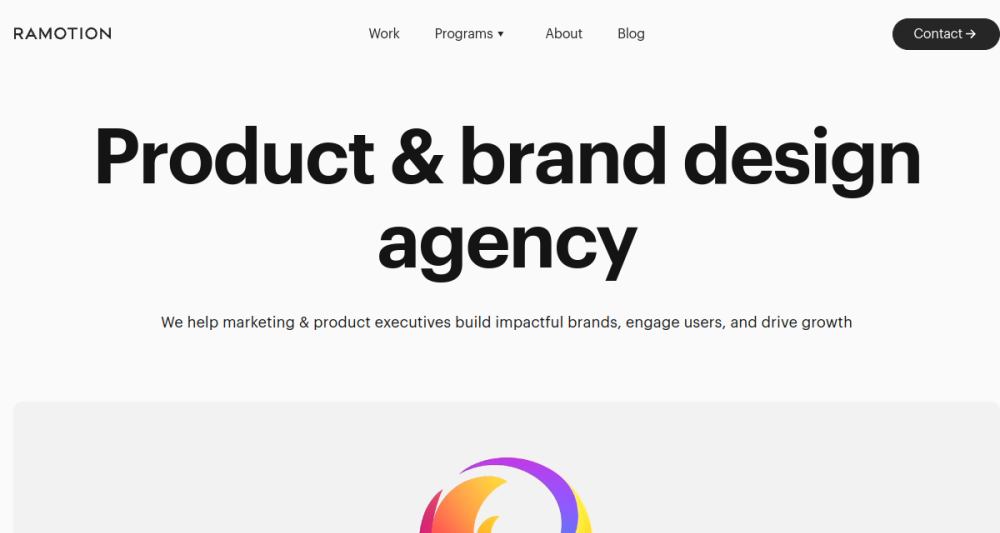
Ramotion is a product and brand design agency that helps product and marketing leaders build brands, engage users, and drive growth.
Starting price
$150-199/hr
Min engagement
$50,000+
Team size
10-49
ramotion.com
Ramotion is a good fit when a SaaS company needs brand identity and product design from the same team. The agency has worked with Stripe, Okta, Salesforce, and Adobe, and its combination of brand and design-systems work is a real differentiator.
Ramotion carries the same premium pricing as Clay, with a $50,000 minimum, and runs a smaller team of roughly 10 to 49 people. That makes it excellent for a focused brand-plus-product engagement but harder to scale across a large parallel program.
Eleken is a pragmatic UI/UX design agency for SaaS that turns clunky MVPs and dev-built tools into clean, usable products using dedicated subscription designers.
Starting price
$25-49/hr
Min engagement
$10,000+ (2-month minimum)
Team size
40+ designers
Eleken is the purest SaaS specialist among the runners-up. It has designed more than 200 SaaS products and works through a subscription model where you get a dedicated designer month to month.
Eleken scores highest of the runners-up on specialization, which is exactly why it is a strong alternative to Bricx Labs for teams that want SaaS focus at a lower rate. The difference is model and depth: Eleken runs closer to a staff-augmentation service with less brand and strategy work, and its $25 to $49 hourly band reflects a value position rather than a premium, design-taste-led one.
Notable clients
TextMagicMindTickleJOORHealthStreamStradigi AI
Visit ElekenData verified from the agency’s own site
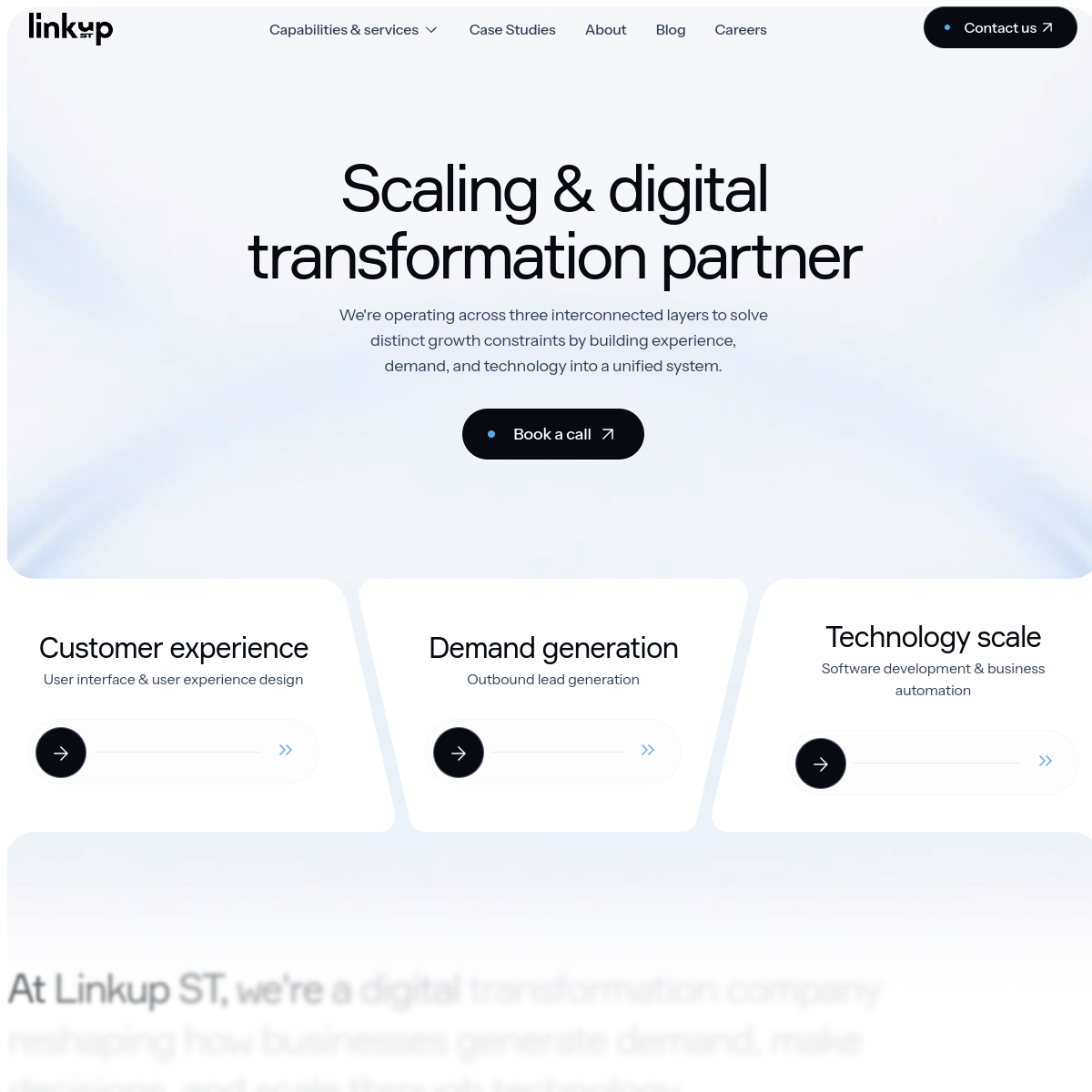
Linkup Studio is a product design and development studio that pairs award-winning UI/UX design with in-house engineering, following a design-driven development approach across SaaS, fintech, and consumer products.
Starting price
$50-99/hr
Min engagement
$10,000+
Team size
50-249
linkupst.com
Linkup Studio is one of the most decorated design teams on this list. The Ukraine-based studio has collected 13 Red Dot awards alongside Webby and Apple recognition, and has shaped products for brands including Tata, Bosch, and Porsche over more than 12 years.
Craft is what stands out. Linkup scores strongly on design taste thanks to that award record, and its design-driven development model keeps UI/UX, engineering, and even demand generation under one roof. That breadth is also why it sits below the SaaS-focused specialists above it: Linkup is a broad product studio serving SaaS, fintech, and consumer work rather than a dedicated B2B SaaS UX shop.
With a $50 to $99 hourly band and a $10,000 minimum, it is a mid-market option for teams that value design awards and an integrated build team over a premium, retainer-first partnership.
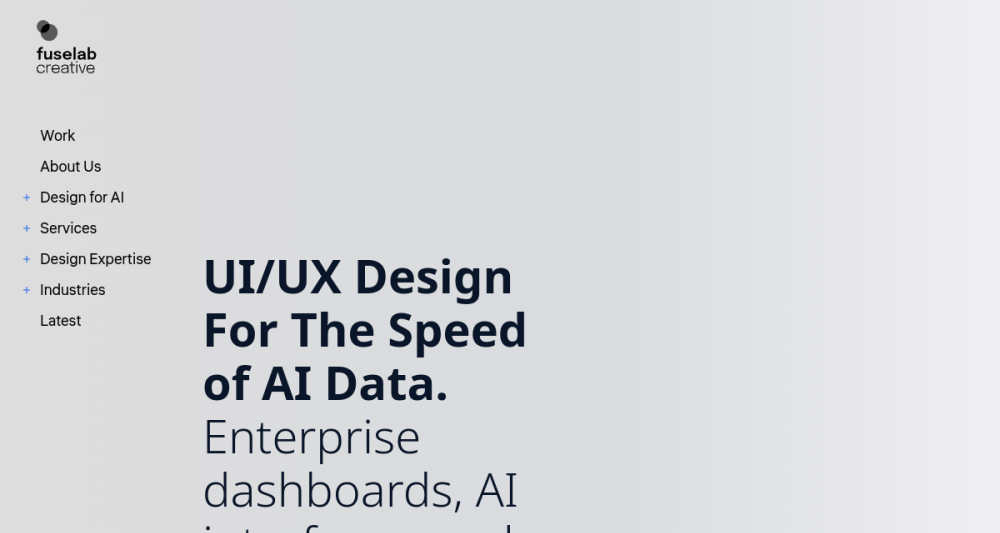
Fuselab Creative is a specialist UI/UX studio for complex, data-heavy, and regulated products, including dashboards, AI interfaces, and data visualization.
Starting price
$100-149/hr
Min engagement
$25,000+
Team size
30+
fuselabcreative.com
Fuselab Creative is the right call for data-heavy and regulated products. The Virginia-based studio specializes in dashboards, data visualization, and AI interfaces, and has worked with Google, Uber, NASA, and the NIH.
Being US-based with a GSA contract makes Fuselab a rare fit for federal and regulated buyers, and every engagement ships a maintainable Figma design system. Its premium $25,000 minimum and 30-plus person team make it best for focused, complex platforms rather than broad, high-volume work.
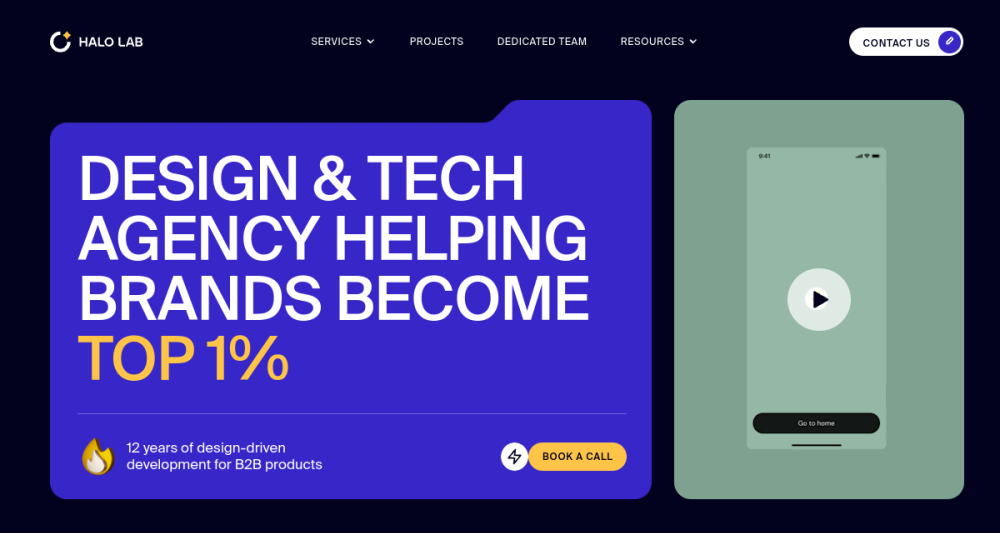
Halo Lab is a design-driven development studio for B2B products, blending UI/UX design and full-stack engineering.
Starting price
$25-49/hr
Min engagement
$10,000+
Team size
51-200
halo-lab.com
Halo Lab is a strong pick when you want design and development from the same team. The Lviv studio has worked with Nokia, Bumble, Opera, and Zoom, and carries one of the best-reviewed profiles in this set.
Its design-plus-engineering model is a genuine advantage for teams shipping fast, though it also makes Halo Lab a generalist rather than a pure UX specialist. The $25 to $49 hourly band keeps it accessible for earlier-stage products.
Qubstudio is a digital product design and branding agency that crafts products for fintech, banking, and SaaS companies.
Starting price
$50-99/hr
Min engagement
$10,000+
Team size
~70
Qubstudio is the domain pick for fintech and banking products. The Lviv agency has worked with Gulf Bank, ila Bank, and Ozone API, and covers the full product lifecycle from research through DesignOps.
Its fintech focus and awards make it credible for regulated financial products. As a broad full-service studio at a mid-market rate, it is a value choice rather than a premium, design-taste-led specialist.
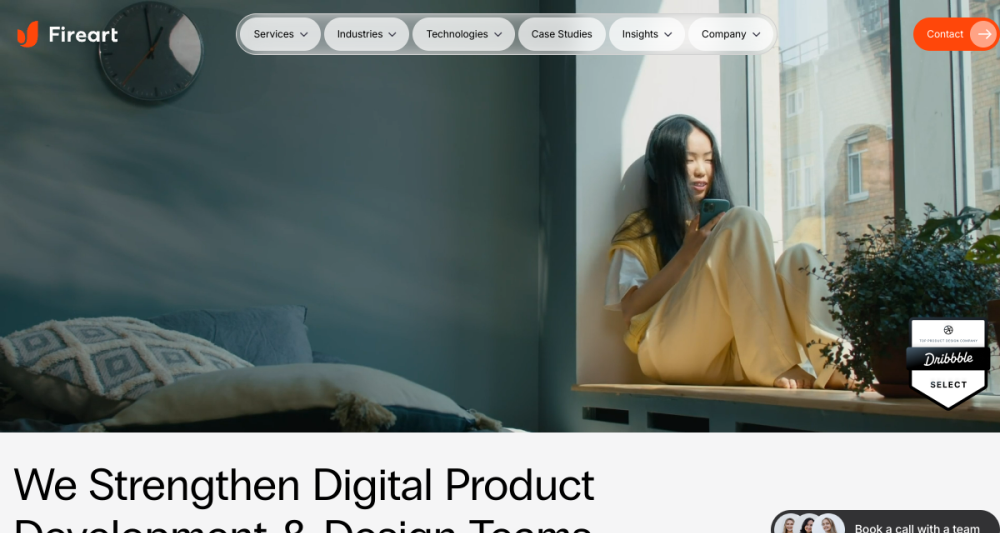
Fireart Studio is a digital product design and development agency offering full-cycle design plus engineering for brands, startups, and enterprises.
Starting price
$50-99/hr
Min engagement
$10,000+
Team size
50-100
fireart.studio
Fireart Studio pairs strong visual craft with in-house engineering. The Warsaw agency has worked with Pipedrive, Bolt, and Google, and is recognized for its motion and visual design.
Fireart is a capable full-cycle partner, but its generalist scope across brands, startups, and enterprises makes it less of a dedicated B2B SaaS UX specialist than the agencies above it.
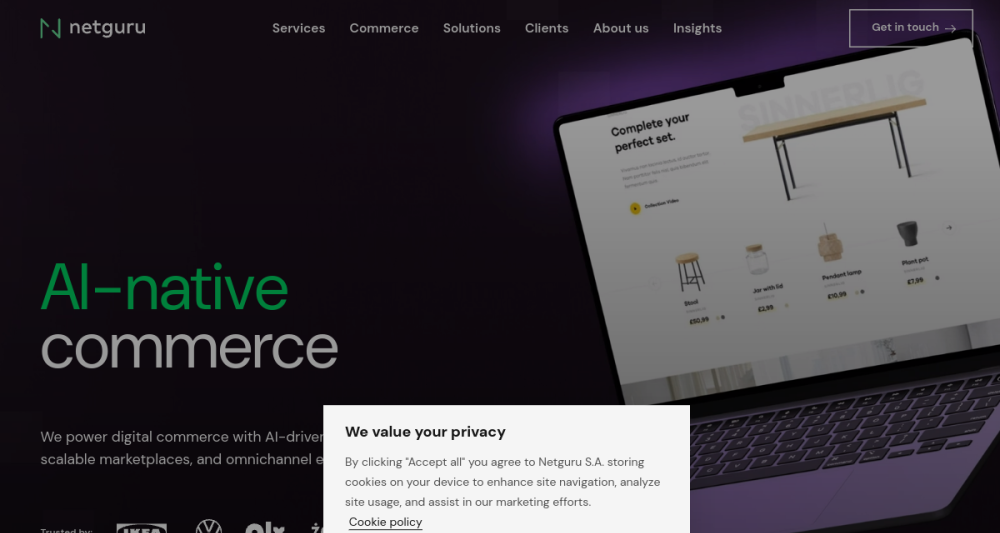
Design Studio by Netguru is a design practice inside a large AI-native software consultancy, offering product design tightly integrated with engineering and strategy.
Starting price
$50-99/hr
Min engagement
$50,000+
Team size
250-999 (company-wide)
netguru.com
Design Studio by Netguru is the enterprise-scale option. It sits inside an 18-year-old software consultancy that has delivered 2,500-plus projects for clients including IKEA, Volkswagen, and OLX.
The advantage is end-to-end capacity: design paired with engineering, AI, and cloud teams. The trade-off is that design is one arm of a large house rather than the whole business, and the $50,000 minimum rules out smaller engagements.
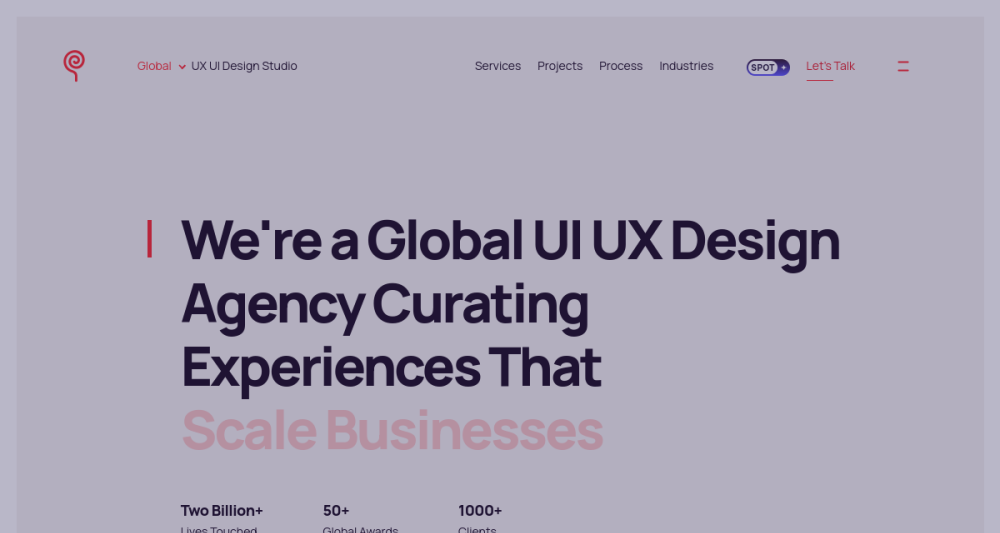
Lollypop Design Studio is a large global UI/UX studio using design thinking and AI to craft scalable, human-centered digital experiences across many industries.
Starting price
$25-49/hr
Min engagement
$10,000+
Team size
51-200
lollypop.design
Lollypop Design Studio brings scale and global reach. With offices across India, the US, the UAE, and Vietnam and a team backed by parent company Terralogic, it can staff large programs across many industries.
That breadth is also the reason it ranks lower for B2B SaaS specifically: Lollypop is a broad enterprise studio rather than a focused SaaS specialist.
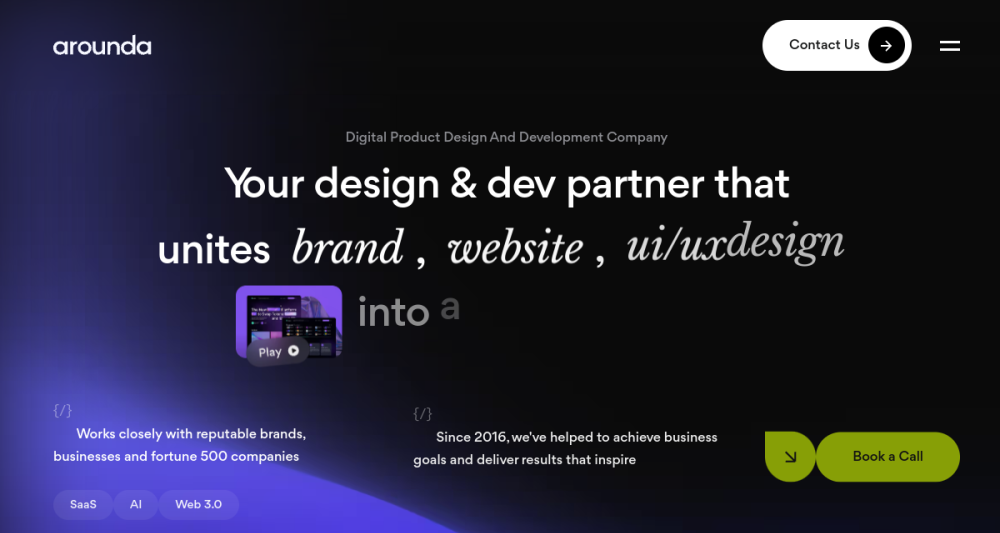
Arounda is a digital product design and development partner that unites brand, website, and UI/UX design into one product offering.
Starting price
$25-49/hr
Min engagement
$25,000+
Team size
10-49
arounda.agency
Arounda is a well-reviewed full-stack partner for SaaS, fintech, and Web3 products. The Estonia-based team carries a 5.0 Clutch rating and documents outcome metrics on its redesign case studies.
As a generalist covering brand, web, and MVP development at a mid-market rate, it is a solid value option rather than a premium B2B SaaS UX specialist.
Notable clients
AutomatticChalhoub GroupGreifMYSO FinanceEnzyme
Visit AroundaData verified from the agency’s own site
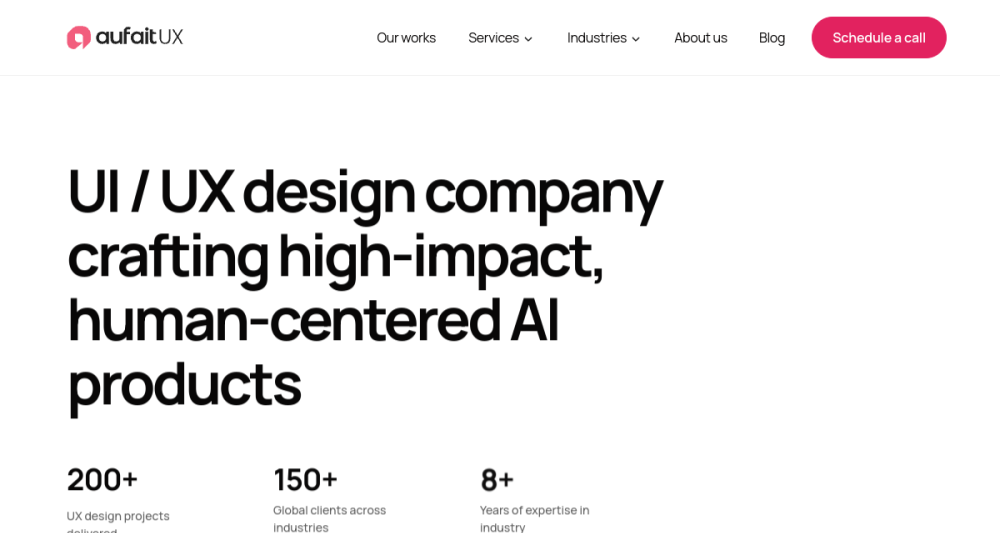
Aufait UX is a research-driven, business-centric UI/UX agency focused on high-impact, human-centered products including AI and enterprise workflows.
Starting price
$25-49/hr
Min engagement
$5,000+
Team size
11-50
aufaitux.com
Aufait UX leads with research and UX strategy. The Bangalore agency lists enterprise clients including Microsoft and HP, and offers a low $5,000 entry point that makes research-led UX accessible.
Its small team and value pricing make it best for focused, research-heavy engagements rather than large or premium programs.
Quick answer: shortlist on four things — industry specialization, design taste on products like yours, senior designers on your actual engagement, and case studies with measurable results. Agencies that top this list win on a specific dimension rather than trying to be everything to everyone.
Match specialization to your product
A B2B SaaS platform, a consumer mobile app, and a regulated fintech product need different things. Agencies like Bricx Labs and Eleken focus on SaaS, Fuselab Creative specializes in data-heavy dashboards, and Qubstudio concentrates on fintech and banking. Shortlist agencies whose portfolio already includes products that look like yours.
Insist on senior designers on your engagement
Ask who will actually do the work. Some agencies win the pitch with senior leads and then staff delivery with juniors. The agencies that rank highest here keep senior designers on the account, which matters most for complex product flows.
Decide between a project and a retainer
A fixed project suits a one-time redesign with a clear endpoint. A retainer suits a product that iterates continuously, which is why SaaS-focused agencies like Bricx Labs and Eleken favor ongoing engagements over one-off deliverables.
Check design-systems and handoff maturity
For anything beyond a single screen, ask how the agency builds and maintains a design system and how it hands designs to engineers. A clean Figma library and a repeatable handoff process are what keep a redesign from unraveling the moment your team starts shipping.
UX agency vs freelancer vs in-house team
Quick answer: a UX agency gives you a senior team and process for complex, ongoing product work; a freelancer is cheapest for small, well-scoped tasks; an in-house team makes sense once design is a constant, full-time need.
Most teams choose based on the size, complexity, and continuity of the work rather than cost alone. Here is how the three options compare on what usually matters.
UX design agency vs freelancer vs in-house team compared on cost, speed, seniority, and best fit.
Factor
UX agency
Freelancer
In-house team
Cost to start
$5k to $50k+
Lowest, hourly
Highest, salaried
Speed to start
1 to 2 weeks
Days
1 to 3 months to hire
Seniority and range
Full team: research, UI, systems
One person’s skill set
Grows with headcount
Best for
Complex or ongoing product work
Small, well-scoped tasks
Constant, full-time design load
Main risk
Cost, fit
Bandwidth, single point of failure
Slow to hire, fixed capacity
What to expect from a UX design engagement
A typical engagement with a UX design agency moves through four stages. Knowing the shape helps you brief better and spot an agency that skips the parts that matter.
1. Discovery and research
The agency learns your product, users, and goals through interviews, analytics review, and competitive analysis. Skipping this is the most common reason a redesign looks nice but does not move metrics.
2. Structure and flows
Information architecture, user flows, and wireframes define how the product works before any visual polish. This is where most of the usability gains are actually made.
3. Visual design and systems
High-fidelity UI plus a design system in Figma so the look stays consistent as your team ships. A maintainable system is what separates a one-off redesign from a durable one.
4. Handoff and iteration
Developer-ready specs, support during build, and testing against real users. Strong agencies tie the work back to product metrics like activation, retention, or task success.
How much does a UX design agency cost?
Quick answer: UX design agencies charge $25 to $200 per hour, with most minimums between $10,000 and $50,000. Premium US agencies start around $150/hr, specialist retainers near $10,000/mo, and value studios at $25 to $49/hr.
Premium US agencies (Clay, Ramotion) start around $150 to $199 per hour with a $50,000 minimum.
Specialist retainers (Bricx Labs) start at roughly $10,000 per month for a senior, ongoing partnership.
Value and offshore studios (Eleken, Halo Lab, Aufait UX) run $25 to $49 per hour with minimums from $5,000 to $10,000.
There is no single best UX design agency; the right choice depends on your product and stage. For B2B SaaS, Bricx Labs ranks first on our design-taste and specialization criteria. For enterprise brand-and-product work, Clay and Ramotion lead. For SaaS teams on a tighter budget, Eleken is the strongest pick, and for data-heavy or regulated products, Fuselab Creative stands out.
What is the best UX agency for B2B SaaS?
For B2B SaaS specifically, Bricx Labs is our top-rated agency in 2026. It works almost exclusively with venture-backed SaaS products from Series A to C, including Writesonic, Sybill, and LTV.ai, and pairs strong design taste with SaaS specialization on a senior-led retainer. Eleken and Qubstudio are the next strongest SaaS-focused alternatives.
How much does it cost to hire a UX design agency?
UX design agencies typically charge between $25 and $200 per hour, and most set a minimum engagement between $10,000 and $50,000. Premium US agencies like Clay and Ramotion start around $150 per hour with a $50,000 minimum, specialist retainers such as Bricx Labs begin near $10,000 per month, and value studios like Eleken and Aufait UX run $25 to $49 per hour.
What should I look for when choosing a UX design agency?
Look for relevant industry specialization, a portfolio that shows design taste on products like yours, senior designers on your actual engagement, and case studies with measurable outcomes. For SaaS specifically, prioritize agencies that focus on B2B software over general web and brand studios, because software patterns like dashboards and permissions rarely transfer from marketing-site work.
Are UX design agencies worth it for startups?
Yes, a UX design agency is worth it for startups that need product-quality design faster than they can hire in-house. Value specialists like Aufait UX and subscription models like Eleken offer entry points from $5,000 to $10,000, while funded startups often choose a senior retainer partner such as Bricx Labs once product complexity grows.
What is the difference between a UX agency and a freelancer?
A UX agency provides a team of designers, researchers, and design-systems specialists plus process and continuity, while a freelancer is a single contributor. Agencies cost more but reduce delivery risk on complex, ongoing products; freelancers can be more cost-effective for small, well-scoped tasks.
Which UX agencies specialize in SaaS products?
The most SaaS-focused agencies in this ranking are Bricx Labs, Eleken, and Qubstudio. Bricx Labs focuses on B2B SaaS across Series A to C, Eleken has designed more than 200 SaaS products on a subscription model, and Qubstudio specializes in fintech and banking SaaS.
How long does a UX design project take?
A focused UX project such as a single-flow redesign usually takes four to eight weeks, while a full product redesign or new SaaS platform typically runs three to six months. Retainer partnerships are ongoing rather than fixed-length, which suits products that iterate continuously.
Should I hire a UX agency or build an in-house design team?
Hire a UX agency when design needs are variable, urgent, or require senior craft you cannot recruit quickly; build in-house when design work is constant and full-time. Many SaaS companies start with a specialist agency to move fast, then hire in-house designers once the workload justifies permanent headcount, often keeping the agency for overflow and specialized projects.
What questions should I ask a UX design agency before hiring?
Ask who will actually do the work day to day, to see case studies in your industry with measurable results, how they run research and testing, how they handle design systems and developer handoff, and what a typical engagement and timeline looks like. The answers quickly separate senior, specialist teams from agencies that win pitches with seniors and deliver with juniors.
Do UX design agencies also do development?
Some do and some do not. Design-and-development studios like Halo Lab, Fireart, and Netguru ship both design and working code, while specialists like Bricx Labs and Eleken focus on design and hand off to your engineering team. Choose a combined studio when you lack engineering capacity, and a design specialist when you want the highest design craft on top of your own build.
What is the difference between a UX, UI, and product design agency?
A UX agency focuses on how a product works: research, flows, and usability. A UI agency focuses on how it looks: visual design and interface polish. A product design agency covers both plus strategy and often works alongside your product team end to end. Most agencies on this list do all three, but their center of gravity differs, which is why specialization matters.
How do I verify a UX design agency's reviews?
Check independent review platforms like Clutch, where reviews are verified through client interviews, and cross-reference the named clients and case studies on the agency's own site. Every agency in this ranking links to its verified Clutch profile so you can read the actual reviews and ratings.
Do UX design agencies sign NDAs and hand over IP?
Yes. Reputable UX design agencies sign NDAs before sharing sensitive details and assign all design IP to the client in the contract. Confirm both in writing before starting, and check that the agreement covers source files, design systems, and any research outputs.
Are these UX agency rankings independent?
Yes. No agency pays to be listed or ranked on this site, and there are no sponsorships or pay-for-placement. Rankings come from a fixed weighted methodology that scores every agency on design taste, B2B and SaaS specialization, client-reported results, and senior team depth.