





Top UX Design Agencies
Menu

AI websites ยท Updated 2026

7 Best Website Agencies for AI-Native Startups in 2026

The 7 best website agencies for AI-native startups in 2026 are Bricx, Lazarev, Orizon, Phenomenon Studio, Ramotion, Excited and Baunfire.

For founders and marketing leads hiring a website design agency for an AI startup whose product is hard to explain visually, where a generic SaaS template won't carry it.

Each pick has a public AI website case study and a Clutch profile. To see the sites first, browse these AI startup website examples.

Updated by the editorial team. No agency pays to be listed.

Table of contents
  1. TL;DR
  2. Match the agency to your AI product
  3. Comparison table
  4. The 7 agencies
  5. Showing the AI product
  6. Explaining an AI product
  7. How we chose these agencies
  8. Cost and timelines
  9. FAQ

The short answer

The top website agencies for AI-native startups in 2026 are Bricx, Lazarev and Orizon. Bricx redesigned the Hobbes site so it opens on the product experience, and projects start at $25,000. Lazarev explained Bacca AI's incident engine through four short video episodes. Orizon designed the brand and website for Botpress, an AI agent platform.

TL;DR: the best agency for each job

  • Best for an AI website that leads with the product, designed and built by one team: Bricx. Projects from $25,000; 5 to 6 weeks for most marketing sites; 8 to 10 weeks with a new brand.
  • Best for turning a technical AI product into a story executives follow: Lazarev. $100,000+ minimum (Clutch).
  • Best for a new brand and site that names an AI category plainly: Orizon. $25,000+ minimum (Clutch); weekly sprints; work typically starts in 1 to 5 business days.
  • Best for a fast AI site rebuild with many pages to follow: Phenomenon Studio. $10,000+ minimum (Clutch); 20+ Artisan marketing pages in less than a month.
  • Best for an AI brand and Webflow site built around a raise: Ramotion. $50,000+ minimum (Clutch).
  • Best when the website and the AI product need one design system: Excited. $10,000+ minimum (Clutch); projects typically kick off within 1 to 2 weeks.
  • Best for a later-stage AI company's corporate website: Baunfire. $75,000+ minimum (Clutch).

Price and timeline signals checked on November 19, 2026 against each agency's Clutch profile and its own website.

Match the agency to your AI product

Start from the row that matches your situation.

Your productBest matchWhat they built
Our product is a new category, and visitors leave before they get what it doesBricx, LazarevBricx rebuilt Hobbes's site around the product experience. Lazarev told Bacca AI's story in four short videos.
Every AI site looks the same, and ours does tooPhenomenon Studio, BaunfirePhenomenon Studio moved Artisan to real product screens. Baunfire gave Replicant custom illustrations, animations and its own accent colors.
We need one line on the homepage that says what we areOrizonOrizon gave Botpress a one-line category headline: "The AI-native customer support platform."
We just raised, and the brand still looks like a side projectRamotion, BricxRamotion rebuilt Murf AI's brand and Webflow site around its Series A. Bricx did brand and web for Billdr.
The website and the app look like two different companiesExcited, BricxExcited runs XILO's app, AI agents and website on one design system. Bricx did product and web for Camb.ai.
We have a seed budget, not a $100,000 onePhenomenon Studio, Excited, Bricx, LazarevPhenomenon Studio and Excited list $10,000 minimums, Bricx starts at $25,000, and Lazarev at $100,000.
A budget of $10,000 or less to startPhenomenon Studio, Excited$10,000 minimum: Phenomenon Studio and Excited.
Something to review within about 4 weeksOrizon, ExcitedOrizon: Weekly sprints; work typically starts in 1 to 5 business days; Excited: Projects typically kick off within 1 to 2 weeks.

Minimums from each agency's Clutch profile; monthly prices and timelines from each agency's own site, checked November 19, 2026.

How these 7 website agencies compare

7 Best Website Agencies for AI-Native Startups in 2026: best for, SaaS case study, location, team size, minimum project and Clutch rating
#AgencyBest forHow they show the AI productSaaS case studyBased inTeam sizeMin projectClutch rating
1BricxAI startups that need a brand and website explaining a new kind of productThe product experience leads the homepage (Hobbes)Hobbes, an AI demo platform for B2B softwareDubai, United Arab Emirates10 to 49 people$25,000+5.0 (32)
2LazarevFunded AI companies selling a technical product to business buyersFour short video episodes of a real incident (Bacca AI)Bacca AI, an AI site reliability engineering toolSan Francisco, United States50 to 249 people$100,000+5.0 (19)
3OrizonAI software companies that need a new brand and website togetherOne-line category headline with a no-card trial (Botpress)Botpress, an AI agent platform for customer supportRemote10 to 49 people$25,000+5.0 (39)
4Phenomenon StudioAI startups that need a repositioned site and a page system marketing can extendRealistic product screens over abstract AI art (Artisan)Artisan, an AI sales agent startupDover, United States50 to 249 people$10,000+5.0 (51)
5RamotionAI startups redesigning brand and website together around a funding roundA new brand system carried across the site (Murf AI)Murf AI, an AI voice platformSan Francisco, United States10 to 49 people$50,000+4.9 (29)
6ExcitedAI startups that want the product and its website designed by one teamThe site recasts the product as an AI agent platform (XILO)XILO, an AI agent platform for insurance agenciesL'viv, Ukraine10 to 49 people$10,000+5.0 (55)
7BaunfireLater-stage AI and technology companies that need a polished corporate siteContent strategy, illustrations and animations that teach the platform (Replicant)Replicant, a conversational AI platform for contact centersSan Jose, United States10 to 49 people$75,000+4.9 (32)

Location, team size, minimum project and ratings come from each agency's Clutch profile, retrieved between August 24 and November 17, 2026.

1

Best website design agency for AI startups with a product that is hard to show: Bricx
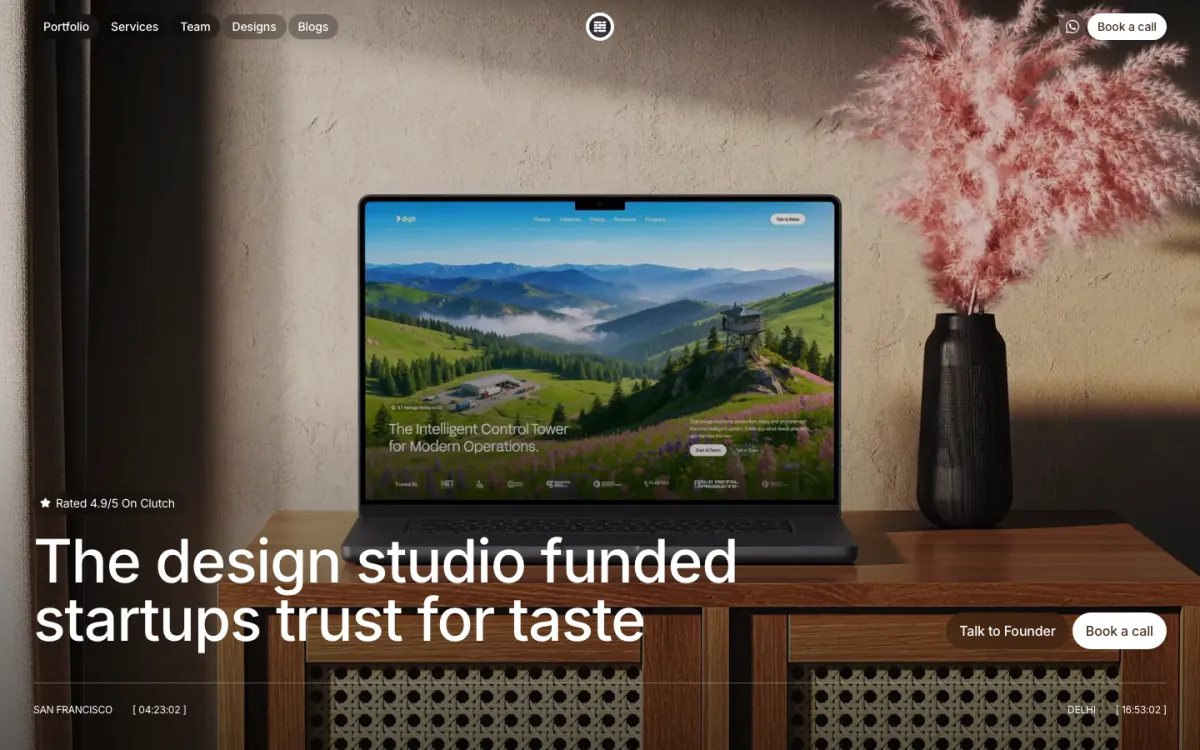
bricxlabs.com
Bricx website homepage

Why #1: Bricx works only with software companies, and its Hobbes case study is this page's problem exactly: buyers understood "book a demo" but not an agentic demo, so the site had to make a new category obvious in five seconds. One team designs the brand and site and builds it, and Bricx has the highest methodology score on this page (4.9 of 5).

Covers
Websites, brand, product UI and UX, front-end engineering, launch videos
Ideal client
Venture-backed AI and B2B SaaS companies; startups are 60% of its Clutch clients
Clients
Hobbes, Billdr, Camb.ai, Writesonic, Sybill
SaaS case study
Brand strategy, web design and product design for Hobbes, an AI demo platform for B2B software. The outcome in the case study is a redesigned site that leads with the product experience, plus a design system for the demo agent and its launcher states. Case study
Timeline
5 to 6 weeks for most marketing sites; 8 to 10 weeks with a new brand Source
Based in
Dubai, United Arab Emirates
Team
10 to 49 people
Clutch
5.0 from 32 reviews
Min project
$25,000+
Not a fit for
Non-software businesses and budgets under $25,000.

Bricx works only with software companies, and three of its public case studies are for AI products: Hobbes, an AI demo platform; Billdr, the AI operating system for general contractors, where Bricx did the brand and website; and Camb.ai, an AI localization and speech translation platform for 150+ languages, where it did product and web.

In the Hobbes case study, Hobbes needed buyers to grasp agentic demos fast, so the redesign put the product itself on the page and added a design system that keeps the demo agent on brand inside each customer's site. Bricx's website redesign page says Hobbes finished the redesign in mid-January and closed its seed by early March.

The same team builds the site in Webflow, Framer or Next.js, as a Webflow Certified Partner and Framer Expert. Projects start at $25,000, and most marketing sites take five to six weeks.
Visit BricxFull Bricx profileClutch reviews

2

Lazarev

Funded AI companies selling a technical product to business buyers

lazarev.agency
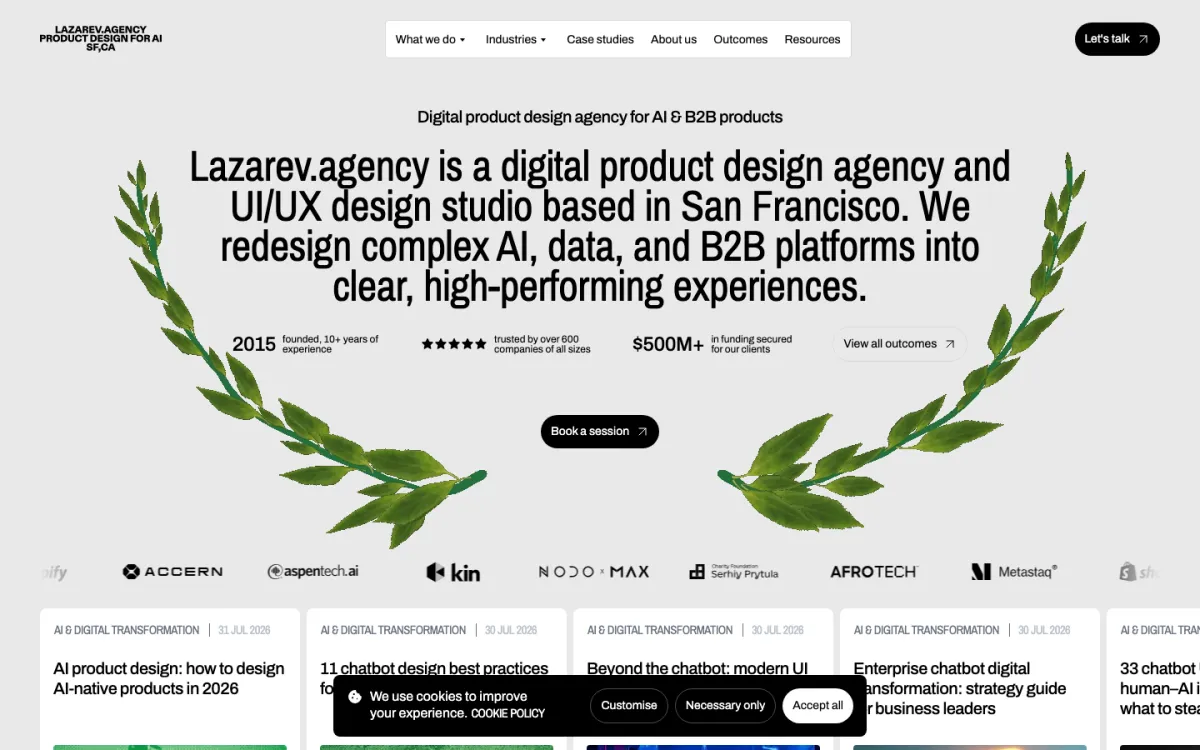
Lazarev website homepage

Why #2: Its Bacca AI case is the closest public match to a hard-to-explain AI product: an AI site reliability tool whose value was buried in technical language, rebuilt into a site that speaks to CEOs and CTOs. It sits below Bricx because its Clutch minimum is $100,000, four times Bricx's starting price.

Covers
UX/UI design 30%, plus web design, web development, branding and product design at 10% each
Ideal client
Mid-market companies, 50% of its Clutch clients, with startups and enterprise at 25% each
Clients
Bacca AI, Accern, Nimble, AspenTech
SaaS case study
A website redesign and new messaging for Bacca AI, an AI platform that detects, diagnoses and resolves infrastructure incidents. Four short episodes take viewers through an outage: the problem, Bacca in action, then the change afterward. Case study
Timeline
Not published on its site
Based in
San Francisco, United States
Team
50 to 249 people
Clutch
5.0 from 19 reviews
Min project
$100,000+
Not a fit for
Seed teams with a small first budget: its Clutch minimum is $100,000.

Lazarev designs AI products and the websites that sell them, and its own site offers an AI product launch program next to web design and development.

In the Bacca AI case, the founders needed engineers and executives to see the same thing, and live demos took too long. Lazarev replaced feature lists with short cinematic episodes of an incident, ordered the page from the cost of downtime to proof and security, and added short system messages that explain in plain words what the AI is doing.

Its Clutch minimum is $100,000, the highest on this page.

Visit LazarevFull Lazarev profileClutch reviews

3

Orizon

AI software companies that need a new brand and website together

orizon.co
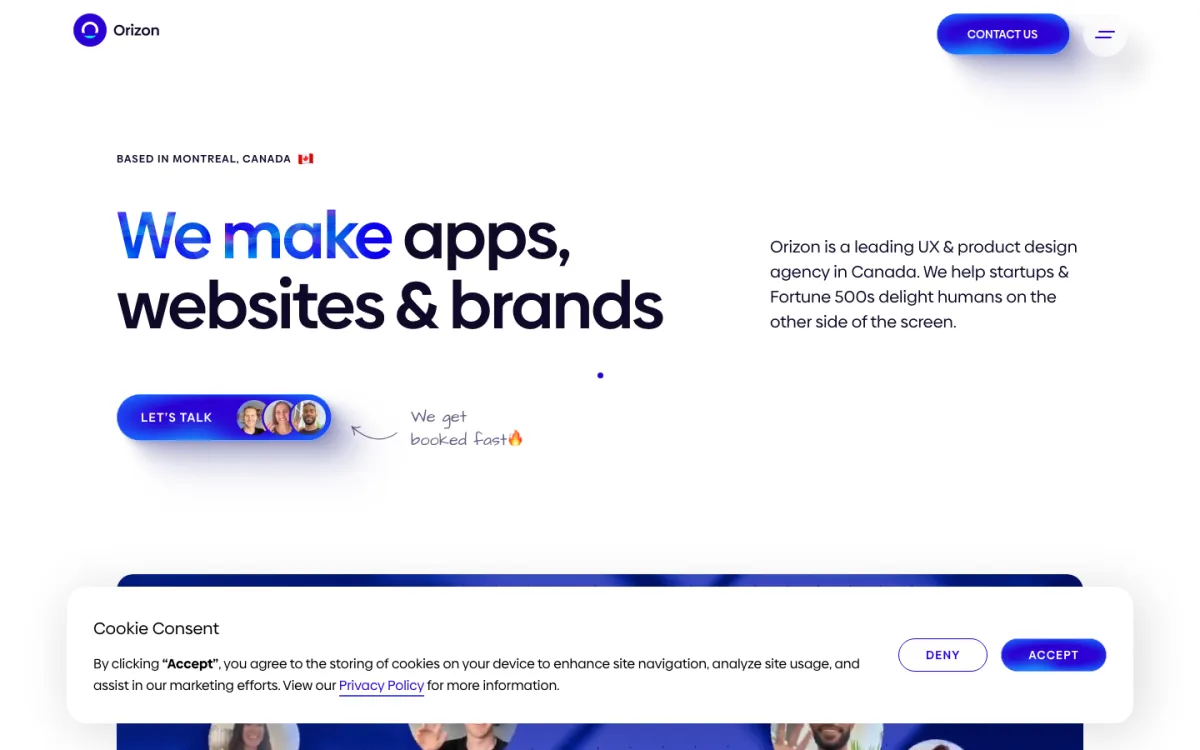
Orizon website homepage

Why #3: Orizon designed a new brand and website for Botpress that names its category in a single line, which suits a startup still teaching the market what it is. It sits below Lazarev because the Botpress case is a single image with no written process, so less of the method is public.

Covers
UX/UI design 40%, plus branding, product design, web design and development at 10% each
Ideal client
Mid-market companies, 55% of its Clutch clients
Clients
Botpress, Instantly, Fairmarkit, Corsearch
SaaS case study
A new brand and website for Botpress, an AI-first B2B software company, positioning it as a platform for building and deploying AI agents. The homepage in Orizon's case image opens on "The AI-native customer support platform.", as the live site still does. Case study
Timeline
Weekly sprints; work typically starts in 1 to 5 business days Source
Based in
Remote
Team
10 to 49 people
Clutch
5.0 from 39 reviews
Min project
$25,000+
Not a fit for
Teams that want the site built in Next.js by the same partner.

Orizon works across UX/UI, branding and web design for software companies, from AI startups to enterprise clients such as Telus.

For Botpress it built a brand and website that state the category first and then say what the agent does: refunds, account updates and multi-step workflows. The case image matches the live homepage line for line, down to the SOC 2 and no-credit-card notes under the call to action.

Work runs in weekly sprints that usually start within 1 to 5 business days, and its Clutch minimum is $25,000.

Visit OrizonFull Orizon profileClutch reviews

Our rankingNeed the AI product itself designed?See the UX agencies ranked for AI companies.See the ranking
4

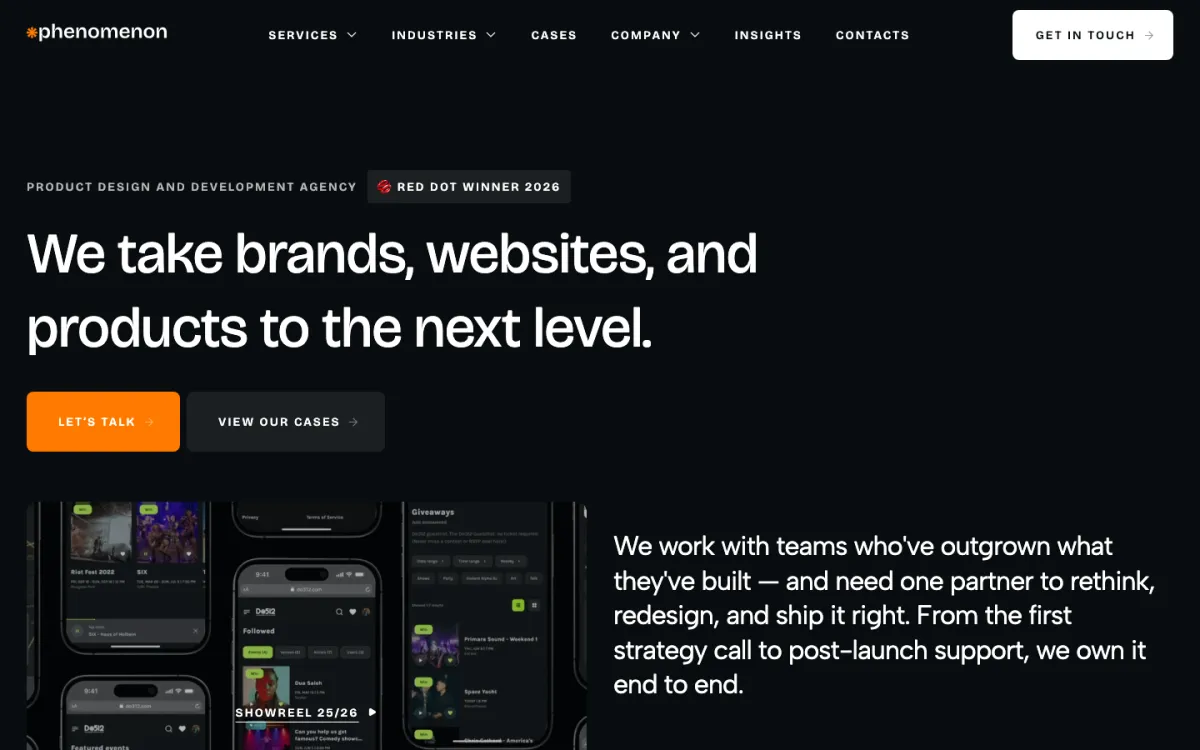
Phenomenon Studio

AI startups that need a repositioned site and a page system marketing can extend

phenomenonstudio.com
Phenomenon Studio website homepage

Why #4: Phenomenon Studio repositioned Artisan as an AI company and shipped more than 20 marketing pages in under a month, which suits a team that needs a site fast and then keeps adding pages. A lower specialization score (3.9) keeps it behind Orizon.

Covers
UX/UI 25%, web development 15%, plus AI, branding, custom software, mobile, product and web design
Ideal client
Mid-market companies, 65% of its Clutch clients
Clients
Artisan, SaltyCloud, KlickEx, Ama Earth
SaaS case study
A UX audit and website redesign for Artisan, which builds AI agents for outbound sales. The case study says research steered the site toward realistic product presentation instead of abstract AI marketing language, and that 20+ responsive pages launched in less than a month. Case study
Timeline
20+ Artisan marketing pages in less than a month Source
Based in
Dover, United States
Team
50 to 249 people
Clutch
5.0 from 51 reviews
Min project
$10,000+
Not a fit for
Teams that want a brand-first studio to lead a full rename.

Phenomenon Studio designs and develops web and mobile products, and a quarter of its Clutch work is development.

In the Artisan case study, Artisan's previous site looked like a traditional SaaS product. Phenomenon opened with a UX audit and a study of how AI companies explain automation, then built a UI system the marketing team could use to add launch, campaign and SEO pages without losing consistency.

Its Clutch minimum is $10,000, and its pricing page runs discovery from two weeks.

Visit Phenomenon StudioFull Phenomenon Studio profileClutch reviews

5

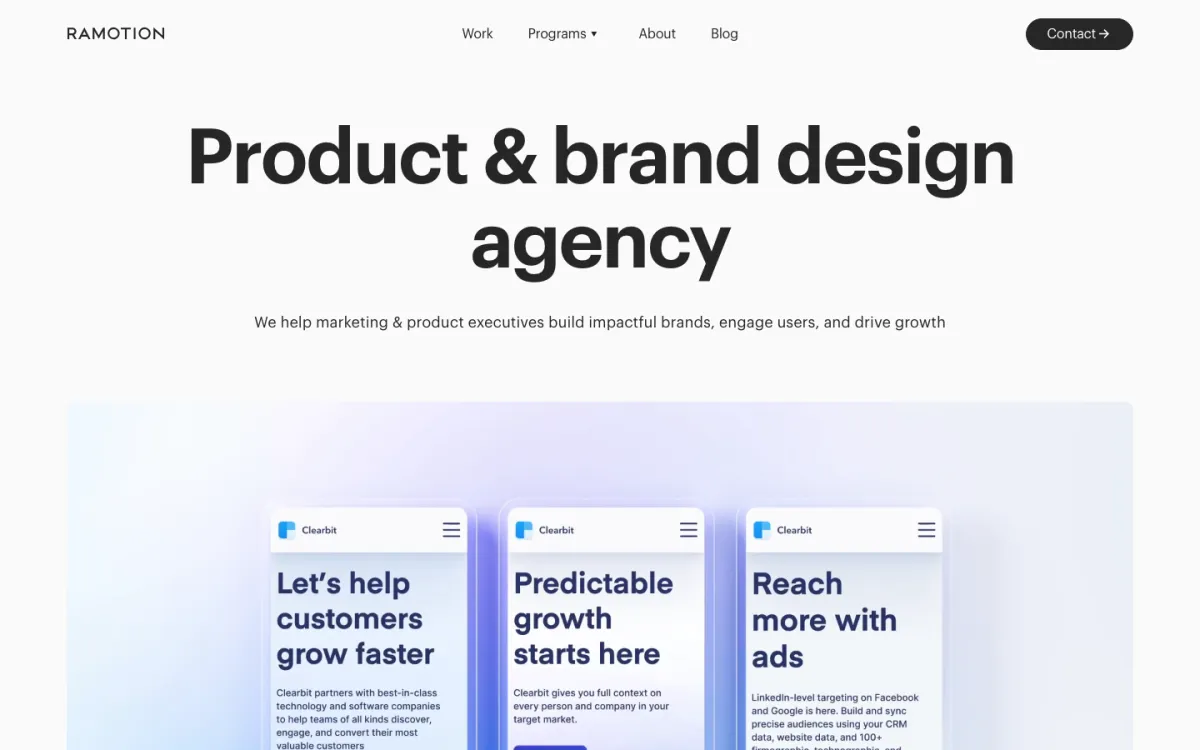
Ramotion

AI startups redesigning brand and website together around a funding round

ramotion.com
Ramotion website homepage

Why #5: Ramotion rebuilt Murf AI's brand and website on Webflow, and its case study ties that work to 22x growth and a $10M Series A. It fits a voice or media AI product where the brand carries as much weight as the demo, a narrower case than the agencies above.

Covers
UX/UI design 40%, branding 30%, web design 20%, low-code development 10%
Ideal client
Mid-market firms (50%), then startups (30%) on Clutch
Clients
Murf AI, Stripe, Okta, Salesforce
SaaS case study
Brand strategy, brand identity, web design and Webflow development for Murf AI, an AI voice platform. The case study credits the new brand and enterprise-ready site with helping Murf through 22x growth and a $10M Series A, and cites 3.6M+ monthly visits. Case study
Timeline
Not published on its site
Based in
San Francisco, United States
Team
10 to 49 people
Clutch
4.9 from 29 reviews
Min project
$50,000+
Not a fit for
Budgets under $50,000, the minimum on its Clutch profile.

Ramotion splits its Clutch work across UX/UI design (40%), branding (30%) and web design (20%), and its own site sells brand programs separately from product programs.

For Murf AI it ran brand personality exercises with the team, built a visual system that scales across pages and designed the enterprise website on Webflow.

Its brand programs cover creation, redesign and team extension, and its Clutch minimum is $50,000.

Visit RamotionFull Ramotion profileRamotion vs BricxClutch reviews

Our rankingRebranding at the same time?Compare agencies that do the brand and the website together.See the ranking
6

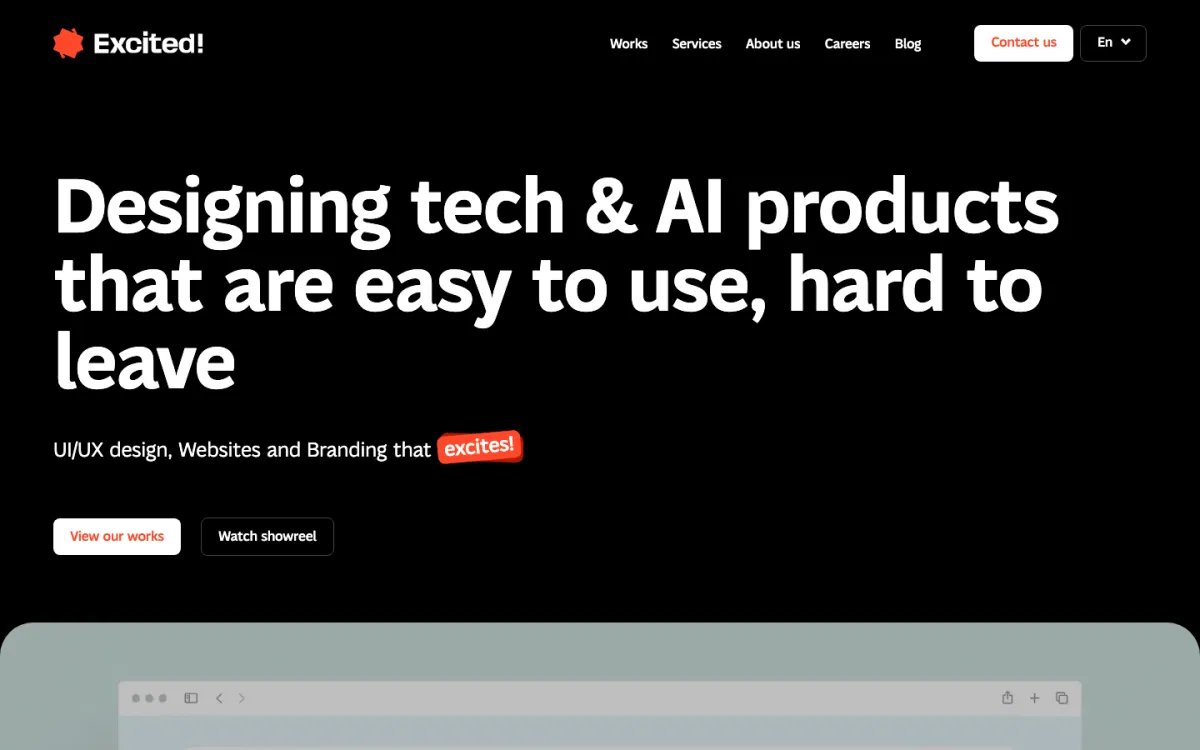
Excited

AI startups that want the product and its website designed by one team

excited.agency
Excited website homepage

Why #6: Excited designed XILO's web app, AI agents and marketing website on one design system, and the new site repositions XILO from quoting software to an AI agent platform. Its score is the second highest here (4.8), but its public work is mostly product design, which puts it behind the website-led studios.

Covers
UX/UI design 90%, web design 10%
Ideal client
Mid-market companies, 50% of its Clutch clients
Clients
XILO, Artificial Societies, InsuredMine, ClubReady
SaaS case study
Product and website design for XILO, whose AI agents take a P&C insurance account from intake through quoting to a client-ready proposal: the agency web app, client portal, Chrome extension, AI agents, design system and marketing website. Excited designed the new site and built it in Webflow, and the case page lists $15M raised over six years. Case study
Timeline
Projects typically kick off within 1 to 2 weeks Source
Based in
L'viv, Ukraine
Team
10 to 49 people
Clutch
5.0 from 55 reviews
Min project
$10,000+
Not a fit for
Teams that only need a marketing site, with no product design.

Excited is a product design agency, and UX/UI is 90% of its Clutch work.

Its XILO partnership, ongoing since April 2020, now covers the web app, the AI agents and the marketing website. The new site explains one agent that handles intake, quoting and proposals, with a page for each P&C insurance segment, and Excited designed it and built it in Webflow.

Components start in Figma and are documented in Storybook, so the app, the client portal, the Chrome extension and the website share one system. The Clutch minimum is $10,000, and its SaaS service page says projects usually kick off within one to two weeks.

Visit ExcitedFull Excited profileClutch reviews

7

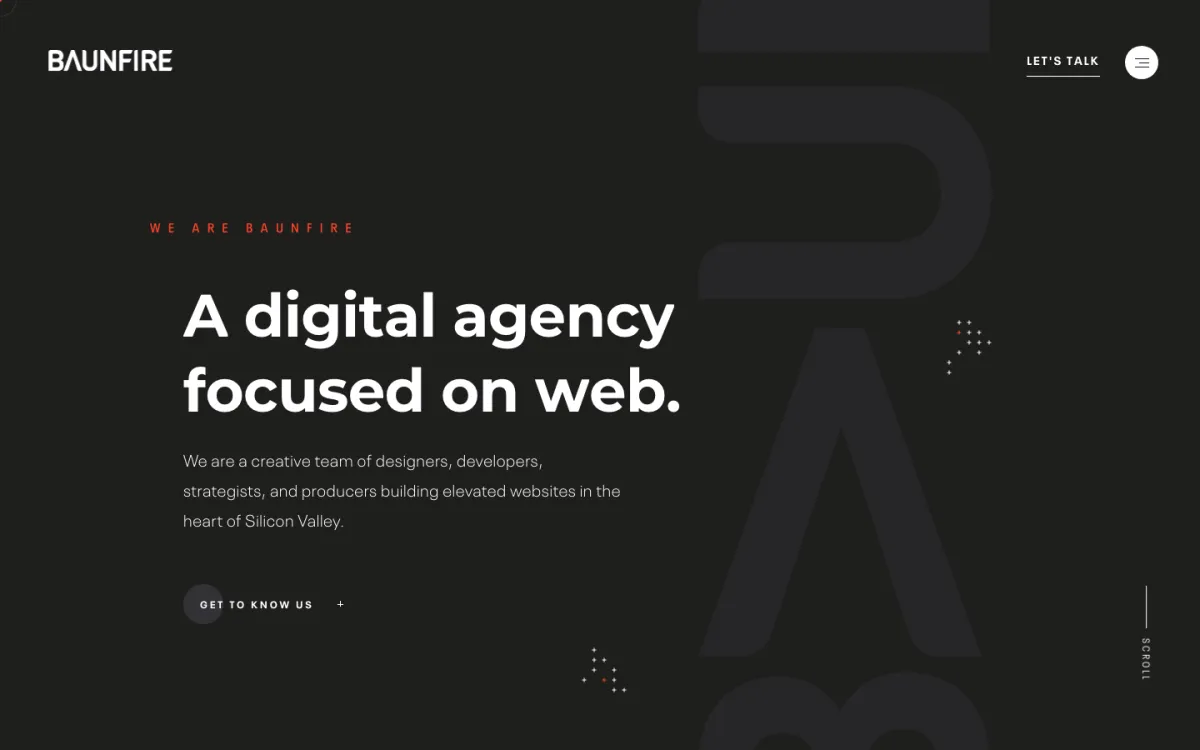
Baunfire

Later-stage AI and technology companies that need a polished corporate site

baunfire.com
Baunfire website homepage

Why #7: Baunfire builds marketing websites for technology companies and launched a new corporate site for Replicant, an AI platform that automates contact center conversations, with messaging written to educate buyers. Its $75,000 minimum and an enterprise-heavy client base (40% on Clutch) make it a later-stage pick, so it closes the list.

Covers
Web design 55%, web development 20%, low-code development 10%, UX/UI design 10%, digital strategy 5%
Ideal client
Enterprise companies, 40% of its Clutch clients, then mid-market and startups at 30% each
Clients
Replicant, Instabase, Optimal Dynamics, Benchling, Swiftly
SaaS case study
A new corporate website for Replicant, whose AI platform resolves customer service calls and messages in natural conversation. Baunfire's role covered design direction, content strategy, and illustrations and animations, with the homepage messaging worked out alongside Replicant's marketing team. The case study gives no results figure. Case study
Timeline
Not published on its site
Based in
San Jose, United States
Team
10 to 49 people
Clutch
4.9 from 32 reviews
Min project
$75,000+
Not a fit for
Early teams: its Clutch minimum is $75,000.

Baunfire is a web agency, and web design and development make up 75% of its Clutch work, with software and IT its largest industry at 40%.

Replicant serves some of the largest contact centers in the Fortune 100, so the brief was to educate buyers with clear, short messaging and simplify the path to conversion. Baunfire planned the content strategy with Replicant's marketing team starting from the homepage, added its own accent colors to the brand palette and set up page templates the team can extend.

It has built corporate sites for two more AI companies, Instabase and Optimal Dynamics. Its Clutch minimum is $75,000, the second highest band on this page.

Visit BaunfireFull Baunfire profileClutch reviews

How we chose these agencies

Quick answer: every agency here has a Clutch profile and a public case study on its own site, and the order weighs fit for this page's buyer first and the published methodology score second.

We chose agencies on one question: can they make an AI product understandable on a website? Each pick has a public case study on its own site for an AI company's marketing website, naming the client, and we read each one for how the product is shown: a live demo, product screens, video or a plain category line.

Each also has a live Clutch profile, a stated minimum and a place in the full ranking of UX design agencies. Numbers appear only where the agency's own case study states them, and the comparison column describes the case study, not a guess about the current live site.

Order weighs fit for this page's buyer first and the site's published methodology score second (design taste 35%, B2B and SaaS focus 30%, client-reported results 20%, senior team depth 15%). Each card says why the agency sits where it does.

Three ways to show an AI product on a homepage

Quick answer: Let visitors use the product in the hero (Hobbes, by Bricx), show realistic product screens instead of abstract AI art (Artisan, by Phenomenon Studio), or tell the product as a short video story (Bacca AI, by Lazarev).

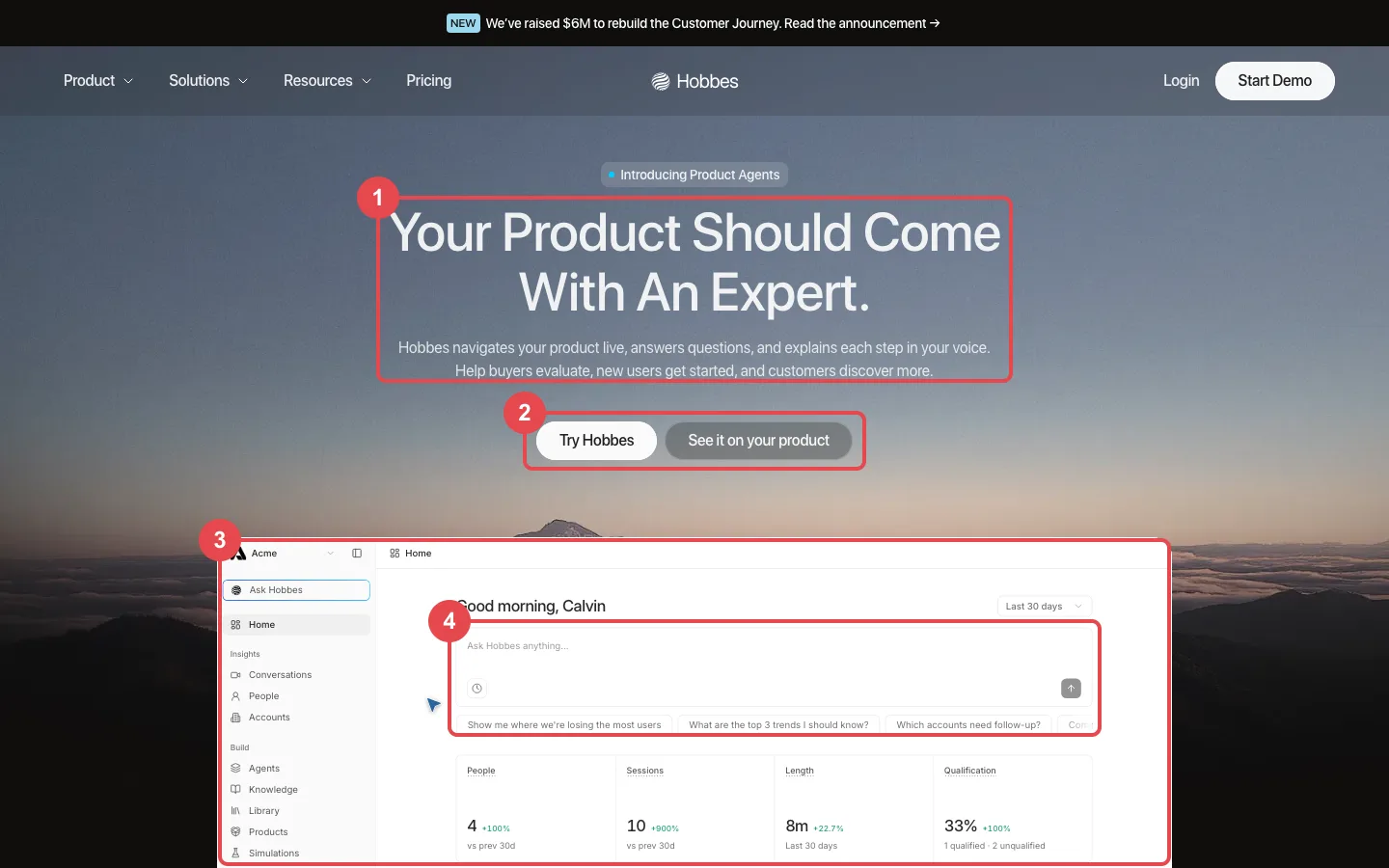
Hobbes homepage with four numbered marks: the headline and line saying Hobbes navigates your product live, the Try Hobbes and See it on your product buttons, the product window under the hero, and the Ask Hobbes prompt with suggested questions
hihobbes.com homepage. Bricx's case study covers the Hobbes brand, website and product design.
  1. The headline names the job, and the line under it says what the product does: it navigates your product live and explains each step.
  2. Two calls to action: try the product now, or see it running on your own product.
  3. The product itself sits under the hero, so a visitor sees the interface before reading any feature list.
  4. A prompt box with real questions ("Show me where we're losing the most users") shows what you can ask the AI.

When the product is an agent, the fastest explanation is the agent working, so let visitors use it in the hero. Bricx built the Hobbes site around the product experience, and the live homepage puts the product window and its prompt straight under the headline (above).

Real product screens are the second route. Phenomenon Studio's research for Artisan pushed the site toward realistic product presentation instead of abstract AI marketing language, so buyers see the tool itself.

When the product works in the background, video can carry it as a short story. Lazarev made four short episodes for Bacca AI that follow an outage from problem to fix, each under a minute.

How do you explain an AI product visually on a website?

Quick answer: Name the job before the technology, show the AI acting on a real input, and explain in plain words what it is doing at each step.

Name the job before the technology. Botpress opens on "The AI-native customer support platform.", and the line under the Hobbes headline says it navigates your product live and answers questions. More credited examples are in the AI startup websites post.

  • Show the AI acting on a real input: a prompt with suggested questions, a support ticket, an outage. A static feature grid asks the visitor to imagine the product, which is the hard part for a new category.
  • Explain what the AI is doing as it does it. Lazarev added short system messages to Bacca AI's page, and clean, product-first layouts like those in SaaS websites like Linear and Stripe keep the attention on the product.

How much does a website agency for an AI startup cost, and how long does it take?

Quick answer: Clutch minimums here run from $10,000 to $100,000, Bricx projects start at $25,000, and published timelines run from 2 to 3 weeks for a homepage-first project to 8 to 10 weeks for a redesign with a new brand.

  • Clutch minimums run from $10,000 (Phenomenon Studio, Excited) and $25,000 (Orizon) to $50,000 (Ramotion), $75,000 (Baunfire) and $100,000 (Lazarev). Bricx projects start at $25,000.
  • Bricx publishes 2 to 3 weeks for a homepage-first project, 5 to 6 weeks for a full redesign and 8 to 10 weeks for a redesign with a new brand, and Phenomenon Studio shipped 20+ Artisan pages in less than a month. On start dates, Orizon usually begins within 1 to 5 business days and Excited within 1 to 2 weeks. The UX agency pricing guide compares rates across the wider market.

What else do buyers ask about website agencies for AI-native startups?

Which website design agencies specialize in AI-native product companies?

Bricx, Lazarev, Orizon, Phenomenon Studio, Ramotion, Excited and Baunfire all publish case studies for AI company websites on their own sites: Hobbes, Bacca AI, Botpress, Artisan, Murf AI, XILO and Replicant. Bricx works only with software companies and designs and builds the site in one team.

What should an AI startup look for in a website agency?

Look for a public case study where the agency had to explain an AI product, and check how they did it: a live demo, product screens or video. Then check whether the same team builds the site, and whether the minimum fits your round. The UX agencies for AI companies list covers agencies for the product itself.

Should an AI startup put a live demo on its homepage?

It helps when the product is an agent or assistant that visitors can try in seconds, as on Hobbes. When the AI works in the background, as with incident response, short videos of the product at work did the job for Bacca AI.

How much does an AI website design agency cost?

Clutch minimums for the agencies here run from $10,000 (Phenomenon Studio, Excited) to $100,000 (Lazarev). Bricx projects start at $25,000, and Ramotion's minimum is $50,000.

Should we redesign the website before or after raising?

Before, if you can. Bricx's website redesign page says Hobbes finished its redesign in mid-January and closed its seed by early March, and Ramotion credits its Murf AI brand and site with helping a $10M Series A.

Can the same agency design the AI product and the website?

Yes. Bricx did product and web for Camb.ai, an AI localization platform, and Excited designed XILO's web app, AI agents and website on one design system.

Who maintains this ranking?

Written and maintained by the Top UX Design Agencies editorial team. Agencies are scored with the published methodology, facts come from each agency's Clutch profile and its own case studies, and errors can be reported through the corrections process. This page was last updated on November 19, 2026.

Related rankings

Go deeper: AI startup websites and who designed them ยท SaaS websites like Linear and Stripe ยท How to design for AI agents